L a - b e a u t é - s a u v e r a - l e - m o n d e ~ D o s t o ï e v s k i

L a - b e a u t é - s a u v e r a - l e - m o n d e  ~  D o s t o ï e v s k i


Friday, February 17, 2023

Don't even think about it! - De bedreigde zwaan, by Jan Asselijn, circa 1650


Asselijn's most famous work and the Rijksmuseum's first acquisition, The Threatened Swan, which portrays a swan aggressively defending its nest from a dog, became a symbol of Dutch national resistance, although it is unknown if the artist intended it to be so. Several inscriptions were added by later owners of the painting, including "Enemy of the state" above the head of the threatening dog, and "Holland" inscribed on one of the nested eggs.


*

Jan Asselijn (circa 1610, Dieppe - 1 October 1652, Amsterdam), Dutch Golden Age painter. From a French Huguenot family, he received instruction from Esaias van de Velde, and distinguished himself particularly in landscape and animal painting, though his historical works and battle pieces are also admired. He traveled in France and Italy, and was a member of the Bentvueghels, a society of mostly Dutch and Flemish artists then active in Rome. He had a withered hand and was small of stature, which earned him the nickname in France of petit Jean Hollandois in France, and that of Krabbetje - little claw - among the Bentvueghels. He was one of the first Dutch painters to introduce a brighter, fresher approach to landscape painting, in the manner of Claude Lorraine. His work was held in high estimation at Amsterdam, and several of his paintings remain in its museums.


Sunday, February 12, 2023

L'Impératrice chez elle - Salon de l’impératrice Eugénie aux Tuileries, by Giuseppe Castiglione, 1868


In the collection of the Liria Palace in Madrid, as are so many of the former belongings of the empress, part of the vast treasure trove of the dukes of Alba, this smallish painting - roughly two by three feet - has always intrigued me. I was so glad to finally come across a large image file, to be able to better examine all the details, the precisely rendered contents of the empress' private space.

I like the tiny view of the Tuileries gardens, glimpsed from the window. The bust is likely of Marie Antoinette, for whom the empress held a great fascination.

*

Giuseppe Castiglione (1829, Naples - 1908, Paris), Italian painter, most known for his genre paintings and portraits. He moved to Paris early in his career - it is likely that he also studied there - and began to show his paintings both in the French capital and Turin. He became a member of the Sociétaire des Artistes and was awarded an honorable mention at the 1861 Salon. He earned a medal at the Salon of 1869, as well as a bronze medal at the Exposition Universelle of 1900; he had been decorated with the Légion d’honneur seven years previously.


Friday, February 10, 2023

Men painting themselves - nine self-portraits

 
Leo Gestel, 1903.
Léonard Sarluis, 1911.
Luis de la Cruz y Ríos, circa 1820s. His portrait of Ferdinand VII of Spain is in the background.
 Evert Louis Van Muyden, 1897.
Bernt Julius Muus Clüver, 1924.
 Hans Thoma, 1871.
Anton Pierre Steyaert, circa 1810s.
Claude-Marie Dubufe, circa 1818.
Yo pintando en julio el craneo de un perro, by Eduardo Naranjo, 1985-91.


Sunday, February 5, 2023

False native, false narrative - "Mr. Reynolds as Quewaygoosquequamteros", by William Notman, 1870


The young Mr. Reynolds, posed in fancy dress - a mishmash of authentic Indigenous clothing and accessories culled from sources across North America - and taking on a fabricated persona abetted by an equally fabricated - and intentionally unpronounceable - "Indian" name, seems likely to have been a certain Henry Reynolds, a member of a wealthy family, prominent in Montreal society.

The gentleman posing with Reynolds is unidentified.

Ignorant of the context, these images are arrestingly beautiful: the handsome young man, posed languidly in his "exotic" finery. But once the fraudulence is known, everything changes, and the masquerade becomes, to a modern audience, something along the lines of "blackface." The spectacle of people dressing up as "Indians" - apparently a very popular costume party choice for upper-class Canadian and American ladies and gentleman of the day - while the subjugation and genocide of Native peoples raged in both countries, is difficult to stomach.


*

William Notman (8 March 1826, Paisley – 25 November 1891, Montreal), Canadian photographer and businessman. Born in Scotland, at the age of thirty he moved to Montreal. An amateur photographer, he quickly established a flourishing professional photography studio on Bleury Street, a location close to Montreal's central commercial district. His first important commission was for the documentation of the construction of the Victoria Bridge across the St. Lawrence River, the opening of which was attended by the Prince of Wales in 1860. The first Canadian photographer with an international reputation, his status and business grew over the next three decades, and he established branches throughout Canada and the United States, meanwhile winning medals at exhibitions in Montreal, London, Paris, and Australia. When he died suddenly after a brief bout of pneumonia at the age of sixty-five, management of his studio was left to his sons. The studio collection - some two hundred thousand negatives, forty-three index books, two hundred picture books, and assorted memorabilia - now reside with the McCord Museum of Canadian History.


Friday, February 3, 2023

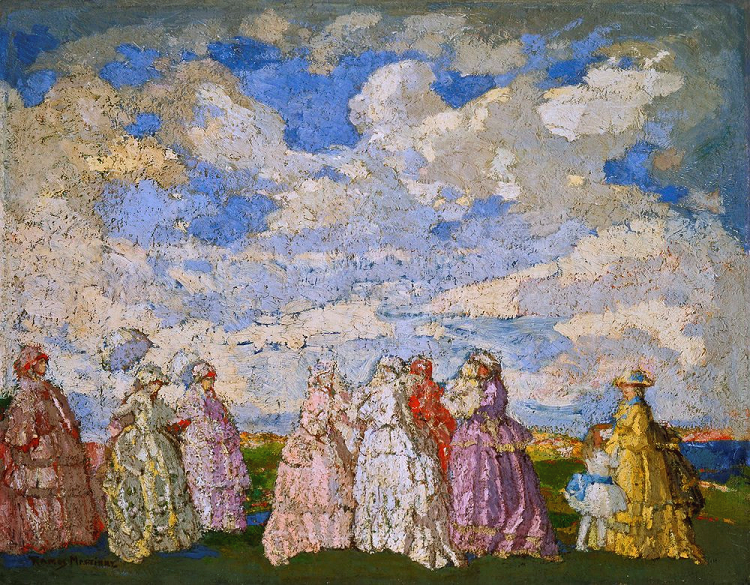
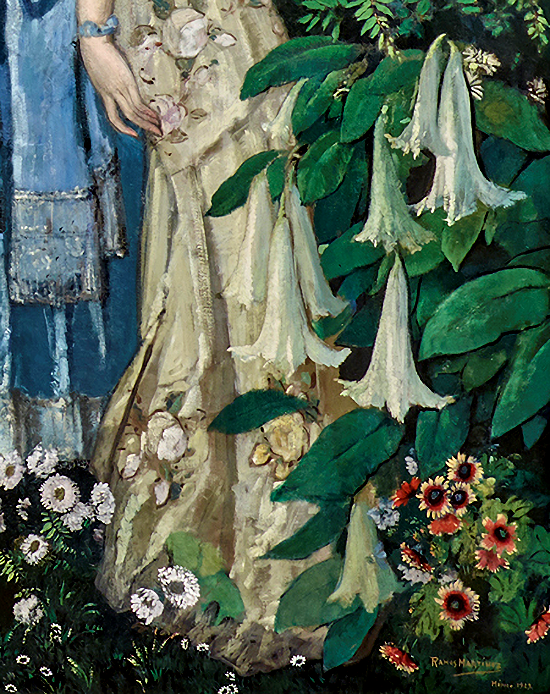
Toda la pintura rosa y azul - Flores Mexicanas, by Alfredo Ramos Martínez, 1915-29


Kept in the artist's studio and worked on sporadically for fourteen years, this very large - nine by twelve feet - and odd painting - both frilly and crude - was, in 1929, a wedding present from the president of Mexico to Charles and Anne Lindbergh; her father was then the United States ambassador to Mexico. The gift was probably not to the Lindberghs' taste, as they never hung it and only three years later presented it to the Missouri Historical Society in St. Louis, where it languished, forgotten, in a store room until 2014. With its display at the Dallas Art Museum in 2020, it had its first public showing in almost a century.


*

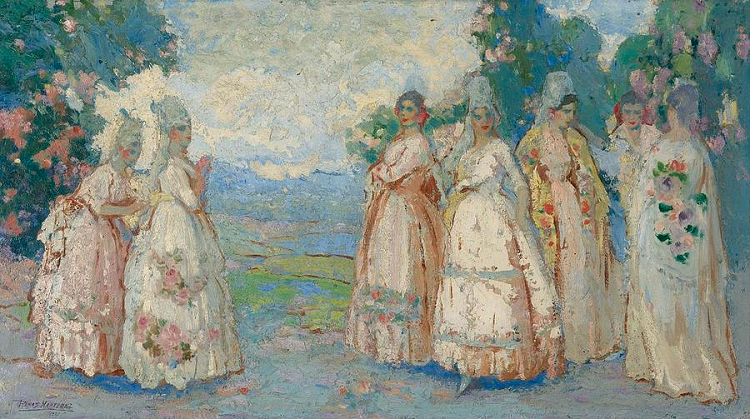
Three other "pink and blue" paintings by Ramos Martínez.
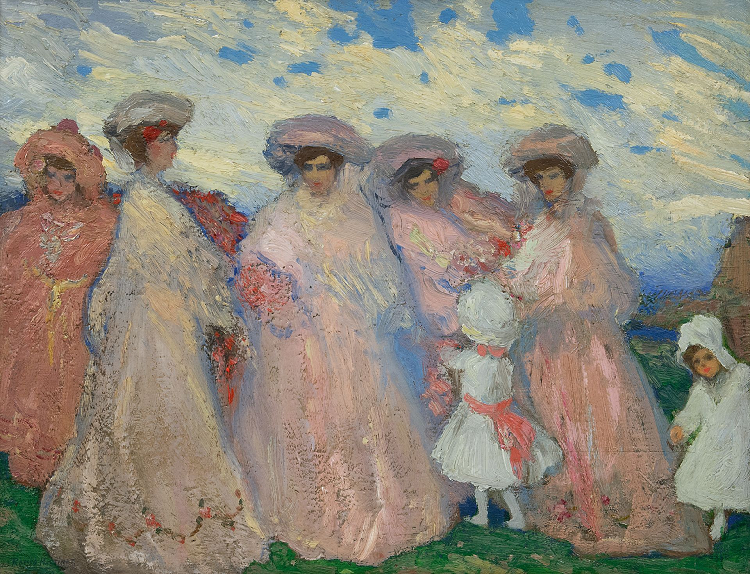
Damas en un paisaje, circa 1905.
La Fête champêtre, circa 1905.
Manolas en un paisaje, 1921.

*

Alfredo Ramos Martínez (12 November 1871, Monterrey - 8 November 1946, Los Angeles), Mexican painter, muralist, and educator, best known for his paintings of Mexican peasants and genre scenes; as the Nicaraguan poet Rubén Darío - a close friend of the artist - wrote, "Ramos Martínez is one of those who paints poems; he does not copy, he interprets; he understands how to express the sorrow of the fisherman and the melancholy of the village." The son of a successful merchant, from an early age he was recognized as having artistic talent. Visiting Mexico, the American philanthropist Phoebe Hearst became his first great patron, buying up his existing work and funding his travel to Paris for further study. He arrived in the French capital in 1900 and, aided by his fluent French, quickly became acquainted with the leading artistic and literary figures of the day. He went on to win a gold medal at the Salon d'Automne in 1906, but he returned to Mexico in 1910. In the midst of the Mexican Revolution, in 1913 he was named director of the National Academy; the next year he stepped down to devote his energies to his "Open Air Schools", but in 1920 was reinstated. He married in 1928. The couple's daughter, born the following year, suffered from a bone disease, and they first sought treatment for her at the Mayo Clinic, eventually settling in the milder climate of Los Angeles. There, his work proved very popular with collectors in the film industry. He also completed several important murals in the area - some of which have survived - before his unexpected death at the age of seventy-four.


Sunday, January 29, 2023

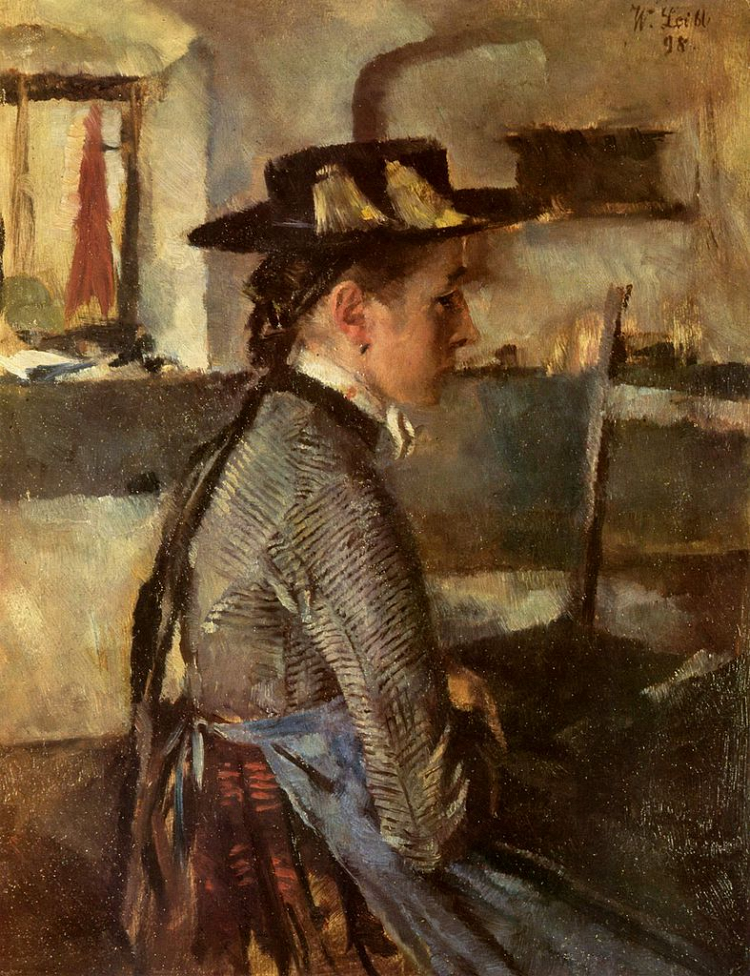
In the precision of light - selected paintings by Wilhelm Leibl

 
Dachauerin (girl from Dachau, 1879.
Kopf eines Bauernmädchens (head of a peasant girl), 1880.
Kopf eines Blinden (head of a blind man), circa 1866-67.
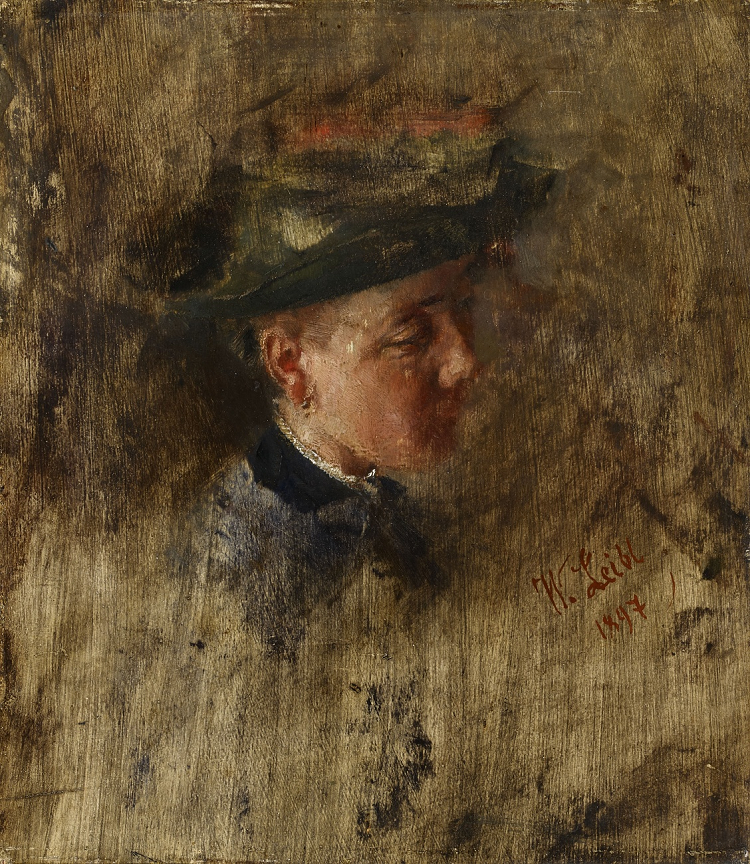
Kopf des Mädchens (head of a girl), 1897
Tierarzt Reindl in der Laube (the veterinarian Reindl in the arbor), circa 1890.
In Erwartung (in anticipation), 1898.
Zwei Köpfe - Die Wilderer (two heads - the poachers), circa 1882-86. Cropped by the artist himself from a much larger composition.
Kopf eines Bauernmädchens (head of a peasant girl), 1879.
Portrait of the doctor Friedrich Rauert, 1877.
Bauernjunge auf einem Stuhl sitzend (peasant boy sitting on a chair), circa 1864-65.
Portrait of the painter Carl Schuch, 1876.
Mädchen mit weißem Kopftuch (girl with white headscarf), circa 1876-77.
Bildnis einer alten Frau (portrait of an old woman), circa 1875.
Kleinkind mit weißem Kopftuch (toddler with a white headscarf), circa 1876.


Wilhelm Maria Hubertus Leibl (23 October 1844, Cologne - 4 December 1900, Würzburg), German realist painter of portraits and scenes of peasant life. The son of the director of the Cathedral choir, he was apprenticed to a locksmith before beginning his artistic training with a local painter; he entered the Munich Academy in 1864. In 1869, Gustave Courbet visited Munich to exhibit his work, making a considerable impression on the younger artist. Courbet suggested he visit Paris, where he was introduced to Édouard Manet, but was forced to return to Germany the following year, due to the outbreak of the Franco-Prussian War. In 1873 he left Munich for the Bavarian countryside, where he depicted the local peasants in unsentimental portraits and genre scenes. These are the paintings he is best remembered for, the work displaying a clarity of light and precision of drawing that draws comparisons with that of Hans Holbein the Younger and other of the Northern Renaissance painters.