L a - b e a u t é - s a u v e r a - l e - m o n d e ~ D o s t o ï e v s k i

L a - b e a u t é - s a u v e r a - l e - m o n d e  ~  D o s t o ï e v s k i


Showing posts with label Henri François Riesener. Show all posts

Sunday, September 21, 2025

Twenty-eight gentlemen - a selection of portraits and self-portraits

 
Self-portrait, by Joseph Highmore, 1747.
Self-portrait at the age of twenty, by Sir David Wilkie, between 1804 and 1805.
Self-portrait, by George Hendrik Breitner, 1882.
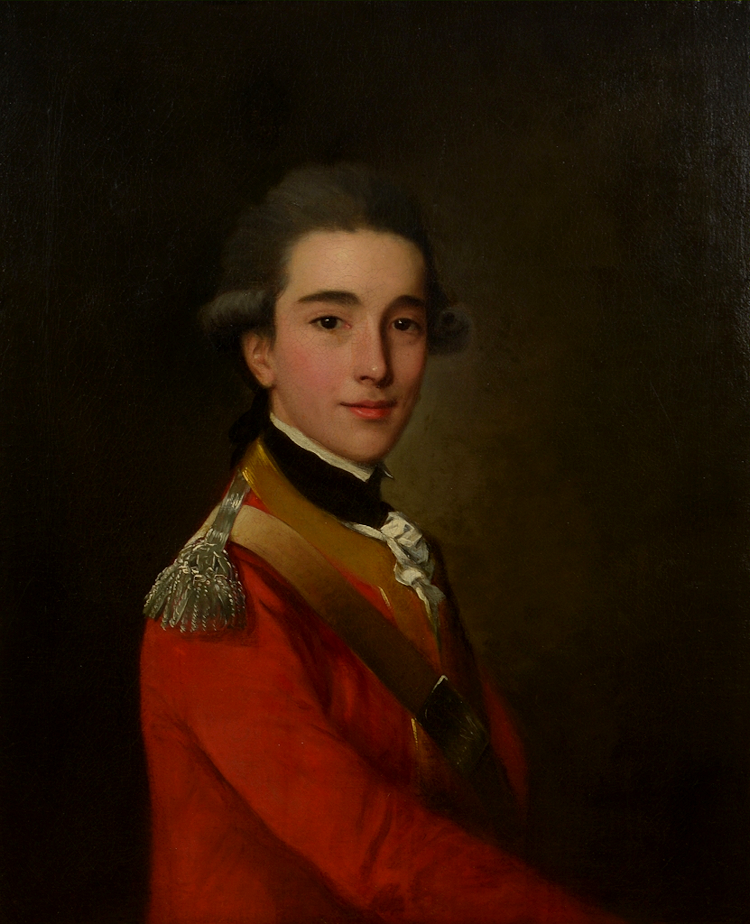
French School, circa 1780s.
Ignazio Degotti, scenographer of the Paris Opéra, miniature by Ferdinando Quaglia, 1812.
Jules Richemont, by Gustave Caillebotte, 1879.
Count Sergei Platonovich Zubov, by Giovanni Boldini, 1913.
"Black Hunter" - portrait of David Lawrence, by Andrew Wyeth, 1938.
The poet Janko Lavrin, by Boris Kustodiev, 1909.
The sculptor Alessandro Vittoria, by Giovanni Battista Moroni, 1552.
Raymond de Verninac, by Henri-François Riesener, circa 1822-25.
Count Wenzel Anton Kaunitz, by Jean-Étienne Liotard, 1762.
Self-portrait, by Eliseu Visconti, circa 1900.
Portrait of a man with glasses, attributed to Rembrandt Peale or French School, circa 1820s.   
Alfonso XIII, by Ramón Casas y Carbó, 1904.
Lord Berners (Gerald Hugh Tyrwhitt-Wilson, 14th Baron Berners), by Rex Whistler, 1924.
The sculptor Tommaso Bandini, cousin of the artist, by Enrico Bandini, circa 1835.
Portrait of a man, called "Il Condottiere", possibly Sforza Maria Sforza, by Antonello da Messina,  circa 1475.
Selbstbildnis im Gruenen (self-portrait in the green), by Siegfried von Leth, 1906.
 Portrait of a gentleman, Anthonis Mor, circa 1570.
Matreier Bub (boy from Matrei), by Franz Eichhorst, circa 1920s.
Leo Ornstein at the Piano, by Leon Kroll, 1918.
 John, Lord Mountstuart, later 4th Earl and 1st Marquess of Bute, by Jean-Étienne Liotard, 1763.
Camillo Borghese (Don Camillo Filippo Ludovico Borghese, Prince of Sulmona and of Rossano, Duke and Prince of Guastalla), by François Gérard, circa 1810.
Richard Meade, 3rd Earl of Clanwilliam, by Sir Thomas Lawrence, 1819.
Presumed Portrait of Jean André Soubry, by Nicolas de Largillière, circa 1729.
The painter Eduard Bendemann, by Friedrich von Amerling, 1837.
Francis Owen in van Dyck costume, by Jean-Étienne Liotard, 1773.


Sunday, May 27, 2018

If the pants fit... - portrait of the singer Jean Elleviou, by Louis-Léopold Boilly


Elleviou in his role in Le Prisonnier or La Ressemblance, circa 1798.

Jean Elleviou (Pierre-Jean-Baptiste-François Elleviou; 14 June 1769, Rennes – 5 May 1842, Paris), French operatic tenor, one of the most celebrated French singers of his time. The son of a surgeon, he rebelled at having to follow in his father's footsteps and fled to Paris, where he fell in with actors and musicians. But just as he was about to make his stage debut, he was apprehended by the police and returned home to Rennes. There he was forced to resume his medical courses but, after only a few months, he convinced his father that he should be allowed to finish his studies back in Paris. Where, once again, he abandoned them. Though he made his debut in 1790 at the Comédie Italienne as a baritone in Pierre-Alexandre Monsigny’s Le Déserteur, a year later he performed in a tenor role in Nicolas Dalayrac’s Philippe et Georgette.


He went on to create forty some roles during the next twenty years, in operas by Grétry, Dalayrac, Monsigny, Boieldieu, Méhul, Isouard, and others. According to contemporaries, he possessed a very sweet and flexible voice, excellent diction, and had a handsome figure and charming stage presence which made him a great favorite with Parisian audiences. He toured in Italy in 1795 and throughout France in 1795-97, returning to Paris to perform at the Opéra-Comique (the newly renamed Comédie Italienne). Of a capricious and irritable nature, he also became more and more financially demanding. Fortunately, he married a very wealthy woman from Lyon. And after he retired in 1813 - at the height of his fame and only forty-four years old - he devoted his time to his properties in Lyon. He was eventually elected mayor of his commune, then general councilor of the Rhône. He died of apoplexy at the age of seventy-three.


Boilly’s portrait of Elleviou depicts the young singer in his role in Le Prisonnier or La Ressemblance, a comic opera in one act with music by Domenico Della-Maria and libretto by Alexandre Duval, which premiered at the Théâtre Feydeau on 29 January 1798.  The painting was exhibited at the Paris Salon in July of 1798 as, “Portrait du C[itoy]en. Elleviou, Artiste du théâtre de L’Opéra-Comique national, représenté dans le costume de son rôle dans la jolie pièce du Prisonnier.” Two years later, at the Salon of 1800, Boilly exhibited a trompe l’oeil painting depicting various drawings and prints including at center an “engraving” that reproduces his earlier portrait of Elleviou.  (The artist also included his own self-portrait in the composition at lower left.)

Trompe l’oeil by Boilly, circa 1800.

***

Engraving by Pierre Audouin after the portrait by Henri François Riesener, circa 1800.
The original portrait by Henri François Riesener.

***

As the title role in Jean de Paris, opéra-comique, music by Boieldieu and libretto by Saint-Just, circa 1812. (2 images.)
As Diego in Picaros et Diego ou la Folle Soirée, opéra-comique, music by Dalayrac and libretto by Dupaty, circa 1803.
As the title role in the opera Joseph, music by Méhul and libretto by Duval, circa 1807.
As Richard in Le Roi et le Fermier, opéra-comique, music by Monsigny and libretto by Sedaine, circa 1806.

***

Two portraits presumed to be of Elleviou. (Which, to me - though both are charming - seems unlikely.)

Portrait by Désiré-Adelaïde-Charles Maignen de Sainte-Marie, 1809.
Miniature de Charles Berny, 1813.


Friday, April 14, 2017

Men, boys, and artists. And dogs.


James Achilles Kirkpatrick (at 16), by Nathaniel Hone the Elder, 1780.
Marc Chagall, by Yuri (Yehuda) Pen, 1914.
Unknown, circa mid-nineteenth century.
Grand Duke Konstantin Konstantinovich, by Osip Braz, 1912.
The Boy with the Arrow, by Douglas Volk, 1903.
Agasse with a bulldog, by Firmin Massot and Jacques-Laurent Agasse, circa 1795.
Prince Kazimierz Nestor Sapieha, by Józef Pitschmann, 1787.
Robert S. Day as Rex, King of Carnival, unknown photographer, 1892.
Detail of below.
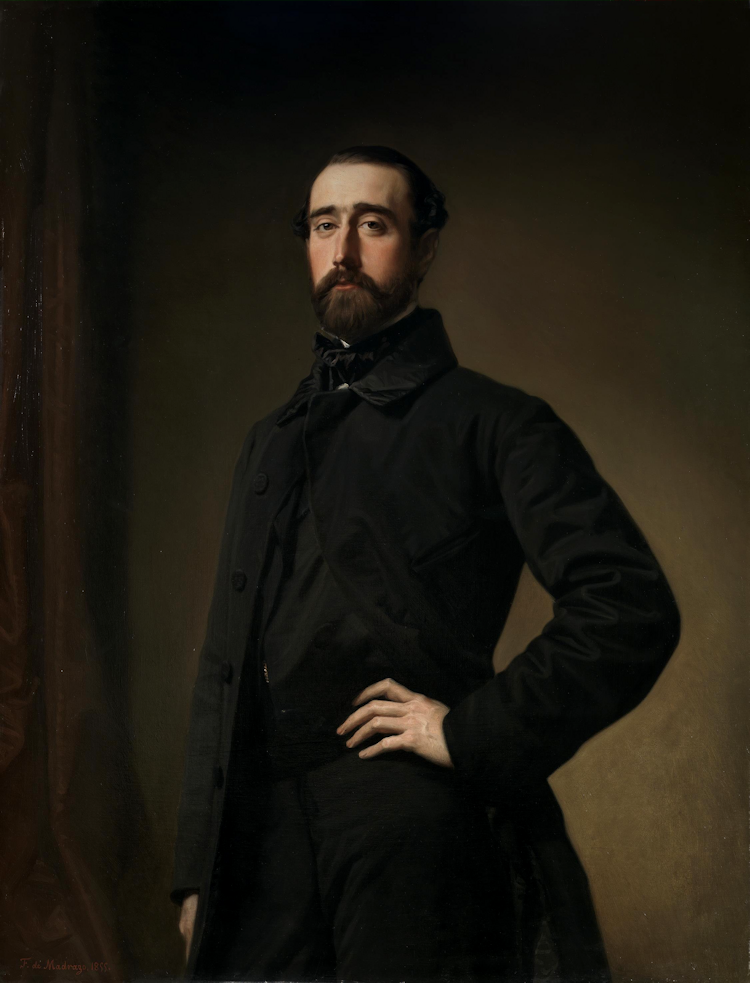
Segismundo Moret y Quintana, by Federico de Madrazo y Kuntz, 1855.
Jaime Girona, later first conde de Eleta, by Federico de Madrazo y Kuntz, 1856.
Unknown, circa second half of the nineteenth century. (Courtesy Ralf de Jonge.)
Portrait of a Young Nobleman, by Jacob Ferdinand Voet (?), circa 1670s-80s.
Joven sentado con libro, Gerardo Sacristán Torralba, 1930.
Self-portrait, by Louis Meijer, 1838.
Rudolph Valentino with his Irish wolfhound Centaur Pendragon, Chicago, circa 1925.
Detail of below.
Patrick Heatly, by Johan Zoffany, circa 1783-87.
Giacomo Meyerbeer (composer, born Jacob Liebmann Beer), by Friedrich Georg Weitsch, 1802.
Eustaquio Marín Ramos (painter), by José Villegas Cordero, 1900.
Unknown, circa first half of twentieth century.
Herthier de Boislambert, by Wojciech Kossak, 1924.
Head of a Young Man, also known as Portrait of a Sailor, by John Singer Sargent, 1878.
Self-portrait, by Nikolai Alexandrovich Yaroshenko, 1894.
"Souvenir de Charles de Pape à ses chers cousins de Bruxelles, 22 08 1904." (Courtesy Ralf de Jonge.)
William Burlton Bennet en chasseur (in hunting costume), by Henri-Pierre Danloux, 1802.
Autoportret z paletą, by Teodor Axentowicz, 1898.
John Barrymore, 1897.
Peotr Lachinov, by Henri-François Riesener, circa 1820-22.
Unknown, circa early twentieth century. (?)
Thomas Hooke Pearson, by George Chinnery, circa 1824.
Unknown man, formerly known as James Scott Duke of Monmouth and Buccleuch, unknown artist, circa 1640s.
Self-portrait in Pink, by Domenico Baccarini, 1903.
William Henry Betty as Young Norval in "Douglas" by James Heath, by John Opie, 1804.