L a - b e a u t é - s a u v e r a - l e - m o n d e ~ D o s t o ï e v s k i

L a - b e a u t é - s a u v e r a - l e - m o n d e  ~  D o s t o ï e v s k i


Showing posts with label Henri-Pierre Danloux. Show all posts

Sunday, May 17, 2026

Wedgwood on a French mantlepiece? - Madame Danloux, by her husband, Henri-Pierre Danloux, circa 1790


The portrait of madame Danloux, née Marie-Pierrette-Antoinette de Saint-Rédan, was painted by her husband, Henri-Pierre Danloux, around 1790 at the Château de Passy, ​​near Villeneuve-le-Bois in the Yonne department, the property of the painter's sister-in-law, Anne-Marie-Louise comtesse de Sérilly. According to the son of the artist and madame Danloux, Guillaume-Simon-Pierre Jules Danloux, the painting was created in the room where he was born.


*


On the chimneypiece is prominently displayed a jasperware sucrier by Wedgwood ornamented with a relief which appears to be a part of the "Domestic Employments" series of child groups designed by Emma Crewe. Between 1787 and 1818 she is thought to have produced various designs  - including the "Domestic Employments" series; usually featuring a small girl sewing or spinning - that were used on medallions, notably for jewelry, and often found on jasperware tea services. The matching teapot and cover displays a variant of a design from Lady Templetown's "Maternity" series. These designs by "lady artists" are all in much the same spirit, which has led to difficulties of attribution.


Dominique Daguerre, the famous marchand-mercier, had concluded an exclusive agreement with Wedgwood as early as 1787 for the marketing of the factory’s products in France. But he was also the exclusive agent for the Sèvres factory in London. He therefore worked in close collaboration with both factories, and with the jasperware technique being widely copied by the Sèvres manufacture, it is often difficult to determine the exact provenance of these various pieces. With the Revolution and the Empire, collaboration with the English manufacturer was suspended, and the Sèvres' production featuring "Wedgwood-style" decoration took over.

Lidded bowl (sucrier) and tea service, Wedgwood jasperware, 1787-90.


Sunday, August 15, 2021

The connoisseur, admiring - Pierre Victor, baron de Besenval de Brünstatt by Henri-Pierre Danloux, 1791


Pierre Victor, baron de Besenval de Brünstatt (14 October 1721, Solothurn, Switzerland - 2 June 1791, Paris), the last commander of the Swiss Guards in France. The son of Jean Victor de Besenval, a colonel of the regiment of Swiss Guards and diplomat in the service of France, the younger Besenval served first as aide-de-camp to the duc de Broglie during the campaign of 1748 in Bohemia, then as aide-de-camp to the duc d'Orleans during the Seven Years' War. He then became commander of the Swiss Guards and a popular courtier at Versailles. A particular favorite of Marie Antoinette and her circle, witty and charming, he was also a passionate collector of art and objects. In the days leading up to the French Revolution, he was given command of the troops which the king had concentrated in Paris. But at the storming of the Bastille, he proved incompetent, fled the capital, was arrested, tried, but miraculously acquitted. He retired to his hôtel in the rue de Grenelle where he sat for this portrait the following year, the same year he died at the age of sixty-nine. 


Today he's remembered primarily as the author of his Mémoires, published in 1805 to 1807 by the vicomte de Ségur. Full of scandalous stories of the court of Louis XVI, both true and false, the authenticity of the memoirs is far from certain. (The vicomte was actually Besenval's son, rather than that of the baron's best friend, Philippe Henri, marquis de Ségur.)


*

Prominent in Danloux's charming portrait of the baron - the connoisseur sitting surrounded by his beautiful things - are three bronze doré mounted Chinese celadon vases, the visible half of the garniture de cheminée in the baron's salon de compagnie. The six vases - three pairs - were sold in 1795, four years after the death of the baron, but were briefly reunited before being auctioned by Christie's London. (The auction actually closed just last week. 8 July 2021, to be precise... which also happened to be my birthday.)


Sunday, May 10, 2020

Randomly XVII


 A charcoal burner of the Transatlantic Company of Fort-de-France, Martinique, circa 1900.
Portrait of madame Larmoyer, by Antoine Vestier, 1804.
Courtesy Stephen Rutledge.
 In Poppyland, by John Ottis Adams, 1901.
Courtesy "Andre Duveen."
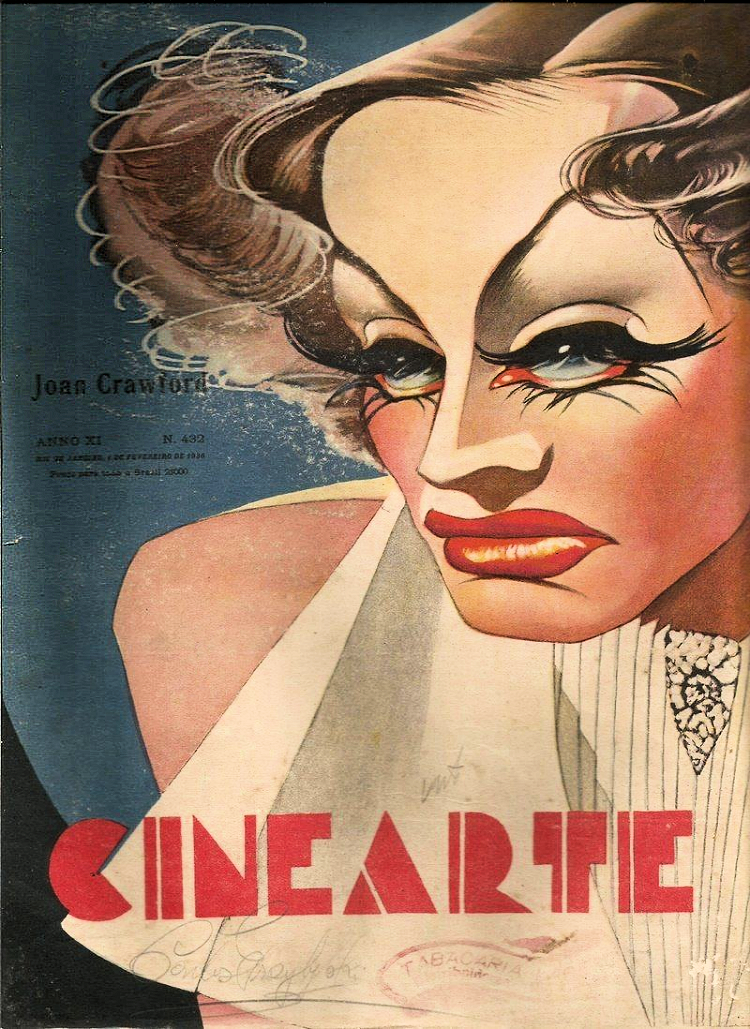
Caricature of Joan Crawford on the cover of Cinearte, February 1936.
 The Farmer in the Artist’s Studio, by Heinrich von Rustige, circa 1839.
Portrait of the Danish Naval officer Louis de Coninck, by Friedrich Carl Gröger, circa first quarter of the nineteenth century.
Self-portrait, by Salomon Adler, circa second half of the seventeenth century.
 Self-portrait, by Judith Leyster, circa 1630.
The Allegory of Painting, by Gerrit van Honthorst, 1648.
Wrestling Match, by Michiel Sweerts, 1649.
Fighting Putti, by Guido Reni, 1625.
"Joe Stecher demonstrates head scissors", 1918.
Semele and Jupiter, by Paolo Pagani, circa 1693.
 Portrait of Federico II Gonzaga, by Titian, circa 1529.
 Bust of Caracalla, Italian, nineteenth century.
Courtesy Ralf De Jonge.
Capt. William T. Shorey and his wife Julia Shelton, with their daughters Zenobia and Victoria, circa 1910.
La Familia Basabe, Julio Romero de Torres, 1919. 
Nature morte aux citrons, by François-Emile Barraud, 1921.
Atalanta’s Eclipse, by Charles Meere, 1938.
Courtesy Stephen Rutledge.
Portrait of Luiza Pesjak, by Mihael Stroj, 1855.
Netherlandish artist, active in England, circa 1600.
Bildnis eines jungen Mannes, by Auguste Alexius Canzi, 1832.
Miškinė in Lithuania, by Petras Kalpokas, 1945.
Josefa del Águila y Ceballos Alvarado y Álvarez de Faria, wife of José de Narváez Porcel, II vizconde de Aliatar, by Federico de Madrazo y Kuntz, 1852.
The Blacksmith, by Frank Leyendecker, 1922 (?).
Academic male nude, by Théodore Géricault, circa first quarter of the nineteenth century.
 The Annunciation  to the Shepherds, attributed to Théodore Gericault, circa first quarter of the nineteenth century.
Charles Ferdinand d'Artois, duc de Berry, en uniforme de la cavalerie noble de l'Armée de Condé pendant son exil à Edimbourg, by Henri-Pierre Danloux, 1796.
The comtesse de Castiglione, by Pierre-Louis Pierson, circa 1865. (Two images.)
Amity, by Bernard Fleetwood-Walker, 1933.
Venus and Adonis, by Arthur Kampf, 1939.
Courtesy Ralf De Jonge.
 Blue Landscape, by Stefan Popescu, 1913.
Cain Killing Abel, by Bartolomeo Manfredi, circa 1610.
Cain and Abel, by Svend Rathsack, 1910.
Three window dressers, by John Rutherford Boyd, circa 1930s.
Portrait of Laura Colton Chapin, by William Sidney Mount, 1833.
Columbia Varsity Eight at the Poughkeepsie Boathouse, 1910.
Courtesy Stephen Rutledge.
Antoine Philippe de La Trémoille, Prince de Talmont, by Léon Cogniet, copy after Guérin, commissioned by Charles X in 1826.
Sweden, 1943.
"Mrs. Hugh J. Chisholm Jr. (Bridget Bate Tichenor) in a coat of red and black broadcloth, red silk jersey dress. From Nicole de Paris.”, by Horst P. Horst, 1939.
Courtesy Paul Ellis.
Portrait of a Lady, by Konstantin Egorovich Makovsky, 1883.
Daguerreotype portrait of an Iroquois man with hand painted detail, circa 1852.
The guardsman Alexei Yakovlevich Okhotnikov, reputed lover of Empress Elisaveta Alexeievna, unknown artist, before 1807.
The Artist's Wife, by Charles Haigh-Wood, circa 1890s.
Nu masculin de dos, by Edouard Antoine Naudin, 1840.
Unknown title, by Kenne Grégoire, circa 2010.
Ernest Long, marine engineer, arrested for "crossdressing", 1922.
Gamblers, by Pavel Fedotov, 1852.
Portrait of the marquise de Grollier, by Elisabeth-Louise Vigée Le Brun, 1788.