L a - b e a u t é - s a u v e r a - l e - m o n d e ~ D o s t o ï e v s k i

L a - b e a u t é - s a u v e r a - l e - m o n d e  ~  D o s t o ï e v s k i


Showing posts with label Duke of Edinburgh. Show all posts

Sunday, November 17, 2019

Battenberg to Mountbatten - portraits by de László


Prince Louis of Battenberg, 1909.

Admiral of the Fleet Louis Alexander Mountbatten, 1st Marquess of Milford Haven, GCB, GCVO, KCMG, PC (24 May 1854, Graz – 11 September 1921, London), British naval officer and German nobleman closely related to the British royal family. Born Prince Ludwig Alexander von Battenberg, the eldest son of the morganatic marriage between Prince Alexander of Hesse and by Rhine and Countess Julia von Hauke. He was closely related to many of Europe's royal families, and became especially close with that of Queen Vicoria after her second eldest daughter, Alice, married his cousin Prince Louis of Hesse. At the age of fourteen he joined the Royal Navy and thus became a naturalized British subject. In the coming decades, he gladly welcomed any assignment that would help him acquire the many necessary skills of naval warfare and demonstrate to his superiors his devotion to a naval career, while eschewing any promotion or honor that might give the impression of being undeserved, the result of the influence of his royal connections. After many far-flung postings and increasingly prestigious commands, by 1904, he had risen to the rank of rear admiral.

Prince Louis, 1910.
Prince Louis, 1910.

In 1912, after a naval career lasting more than forty years, he was appointed First Sea Lord, the professional head of the United Kingdom's Royal Navy. With the approach of World War I, together with the First Lord of the Admiralty, Winston Churchill, he took steps to ready the British fleet for the coming conflict. But there had been grumblings about his German heritage for some time, and after the commencement of hostilities, with the rapid rise of anti-German sentiment among the British public, the press, and with resentment even being stirred by others in the Admiralty, Churchill asked for his resignation in October of 1914.

In the summer of 1917, in the thick of war and the height of anti-German feeling, King George V changed the name of the British royal house from Saxe-Coburg and Gotha to Windsor. At the same time, he and all his British relatives relinquished their German titles and styles, and adopted British-sounding surnames. The King compensated his male relatives by creating them British peers. Prince Louis was made Marquess of Milford Haven, Earl of Medina, and Viscount Alderney, and he and his three younger children took on a new surname, transforming Battenberg into a more English-sounding Mountbatten.

Prince Louis, 1909.
Princess Victoria of Battenberg, 1907.

In 1884, Louis had married his first cousin once removed, Princess Victoria of Hesse and by Rhine (Victoria Alberta Elisabeth Mathilde Marie; 5 April 1863 – 24 September 1950). Victoria was the eldest child of Princess Alice, herself the second daughter of Queen Victoria and Prince Albert. Athe age of fifteen, after the death of two of her siblings, then the death of her mother, Victoria, as the eldest child, assumed the role of mother to the younger children and of companion to her father. She later wrote, "My mother's death was an irreparable loss ... My childhood ended with her death, for I became the eldest and most responsible." Much later she suffered many more family tragedies, including the murder of her two sisters, Empress Alexandra and Grand Duchess Elisabeth, during the Russian Revolution, as well as the air crash of 1937 that devastated the Grand Ducal family of Hesse; she lost her sister-in-law, nephew, granddaughter, and two great-grandsons. Then her elder son died the following year of bone cancer. Through it all, she was the backbone of the family.

Victoria Mountbatten, the Dowager Marchioness of Milford Haven, 1923.

She and Louis had a happy marriage, though with much travel and separation because of his naval career. They had four children:

Alice (Victoria Alice Elizabeth Julia Marie; 25 February 1885 – 5 December 1969), who, in 1903, married Prince Andrew of Greece, with whom she would have four daughters - all would go on to marry German princes - and, later, they would be the parents of the present Duke of Edinburgh. (Born Prince Philip of Greece and Denmark, he adopted the name Mountbatten before his marriage to the future Queen.)

Louise (Louise Alexandra Marie Irene; 13 July 1889 – 7 March 1965), who married, as his second wife, the future King Gustaf VI Adolf of Sweden in 1923, and became Queen of Sweden after his accession in 1950.

George, 2nd Marquess of Milford Haven, GCVO (George Louis Victor Henry Serge Mountbatten; 6 December 1892 – 8 April 1938), who married Countess Nadejda Mikhailovna de Torby, morganatic daughter of Grand Duke Michael Mikhailovich in 1916. They had two children before his early death.

Admiral of the Fleet Louis, 1st Earl Mountbatten of Burma (Louis Francis Albert Victor Nicholas Mountbatten; 25 June 1900 – 27 August 1979), British Royal Navy officer and statesman, uncle of Prince Philip, Duke of Edinburgh, and second cousin once removed of Queen Elizabeth II. During the Second World War, he was Supreme Allied Commander, South East Asia Command (1943–1946). He was the last Viceroy of India and the first Governor-General of independent India. He married heiress Edwina Ashley in 1922 and they had two daughters together.

Princess Andrew of Greece and Denmark, 1907.
De László at work on the portrait above, with the model and her husband.
Her husband, Prince Andrew of Greece and Denmark, 1913.
Princess Andrew, 1907.
Princess Andrew, 1922.
Princess Andrew, 1922. It's believed that this portrait and the one above were completed on the same day.
George Mountbatten, 2nd Marquess of Milford Haven, 1924.
Lord Louis Mountbatten, 1924.
Lord Louis, 1925.
His wife, Edwina, Lady Mountbatten, 1923. This appears to be a sketch for the following portrait.
Lady Mountbatten, 1923. Posed in her wedding gown; the event had been celebrated the year before.
Lady Mountbatten, 1924.
Princess Louise of Battenberg, 1907.
Princess Louise, 1907.


Friday, February 24, 2017

Four sisters - photographs of the daughters of the Duke and Duchess of Edinburgh


Alfred, the Duke of Edinburgh, later Duke of Saxe-Coburg-Gotha, was the second son of Queen Victoria. The duchess, the former Grand Duchess Maria Alexandrovna, was the only daughter of Alexander II of Russia. The couple's first born, Alfred, died a suicide at the age of twenty-four. But they had four daughters: Marie "Missy" (29 October 1875 - 18 July 1938), later Queen of Romania; Victoria Melita "Ducky" (25 November 1876 - 2 March 1936), later Grand Duchess of Hessen und bei Rhein and, after that, Grand Duchess Kirill of Russia; Alexandra "Sandra" (1 September 1878 - 16 April 1942), later Princess of Hohenlohe-Langenberg; and Beatrice "Baby Bee" (20 April 1884 - 13 July 1966), later Infanta of Spain. The sisters were very close, the first three more so; they were only a year and two years apart in age. Beatrice was six year younger than her closest sibling and doesn't always appear in these group portraits.

Victoria Melita, Alexandra, Marie.
Marie, Victoria Melita, Alexandra. Though second born, Victoria Melita was always dominant among the sisters.
Alexandra, Victoria Melita, Marie.
Victoria Melita, Alexandra, Marie.
Marie, Victoria Melita, Alexandra.
Beatrice, Victoria Melita, Alexandra, Marie.
Victoria Melita, Marie, Alexandra, Beatrice. Victoria Melita and Marie had by far the closest bond among the four.
Alexandra, Beatrice, Victoria Melita, Marie.
Beatrice, Marie, Alexandra, Victoria Melita. From a portrait by Friedrich August von Kaulbach, circa 1900.
Beatrice, Marie, Victoria Melita.
Marie, Victoria Melita, Alexandra.
Alexandra, Marie, Beatrice, Victoria Melita.

*

Addendum 4/5/2021:

Kaulbach's portrait of the four sisters, seen above in a reproduction from a vintage postcard, originally hung in the dining room of the Edinburgh Palace in Coburg. Unseen for many decades, it was thought that it might actually be lost. Only recently has it been confirmed as being safely held in the private collection of a family descendant.


Friday, June 10, 2016

Young Prince Philip of Greece and Denmark - the Duke of Edinburgh on his ninety-fifth birthday


Photographed in traditional Greek Evzone costume by Emile Markovitch, 1930.

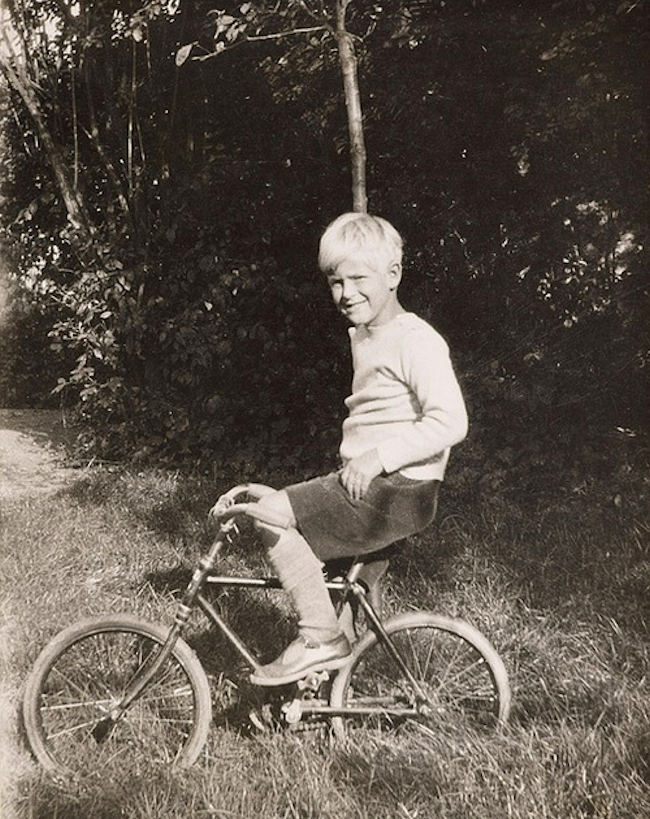
Prince Philip, Duke of Edinburgh, the husband of Queen Elizabeth II of the United Kingdom, Canada, Australia, New Zealand, and Head of the Commonwealth, was born Prince Philip of Greece and Denmark on 10 June 1921. Today is his ninety-fifth birthday.

With his mother, 1921.
Circa 1922.

His mother, the former Princess Alice of Battenberg, was a great-granddaughter of Queen Victoria. Born at Windsor Castle, she was found to be profoundly deaf but learned to speak and lip-read in at least four languages. His father was Prince Andrew, fourth son of King George I of the Hellenes. The Greek royal family was anything but Greek; the King was born into the Danish royal family - the reason the dynasty is referred to as "of Greece and Denmark" - and at the time of Philip's birth the family was closely linked through marriage and descent to the royal families of Great Britain, Russia, Prussia, the Grand Duchy of Hesse and, of course, Denmark. His parents had married in 1903 and Philip had four considerably older sisters: Margarita, Theodora, Cécile, and Sophie.

With his parents and sisters, circa 1922.
July 1922.
Same as above.

The current Greek monarchy had only been established in 1863 and had often been at war, both internal and external. The were frequently at odds with their own often openly antagonistic government, and had fought a series of wars with their Balkan neighbors. And in 1917 at the height of World War I, the opposition of the government to the Royal Family's stance of neutrality eventually led to Philip's uncle, King Constantine I, being forced to abdicate. Most of the family would go into exile in Switzerland. As it turned out, they were recalled three years later, but at the time of Philip's birth in 1921, once more at war with the Turks, the régime was again faltering. In September of the following year King Constantine was forced to abdicate a second time, and three months later the eighteen-month-old prince and his immediate family left Greece aboard a British naval vessel. They settled in the Paris suburb of Saint-Cloud in a house lent to them by a wealthy relative, Princess George of Greece, née Princess Marie Bonaparte.

Circa 1925-26.
Same as above.

By the end of the decade, Princess Andrew had gradually succumbed to mental illness, suffering hyper-religious and sexual delusions, which was eventually diagnosed as paranoid schizophrenia. She would be institutionalized for some time and then spend several years living an itinerant existence in central Europe, incognito; her own mother was the only family member with whom she retained contact. From the summer of 1932 until the spring of 1937, Philip neither saw nor received any word from his mother, not even a birthday card. She would finally begin to reconnect with her family in 1937, when her son was fifteen.

Photograph by Emile Markovitch, 1927.
Same as above.
With his parents and sisters - left to right: Margarita, Cécile, Sophie, and Theodora - 1928.

In the meantime, in the space of eight months in 1930-31 when he was only ten years old, all four of his sisters married into German princely and grand ducal families. (Without the presence of their mother.) And, his parent's marriage having crumbled under the weight of their enforced retirement and, later, the Princess' illness, Philip's father fairly abandoned the family, going to live aimlessly on the French Riviera in a series of apartments and hotel rooms with a series of mistresses.

Circa late 1920s.
With his second cousin King Michael of Romania, 1928.
1929.
1929.

Prince Philip had first been educated at the MacJannet American school in Paris, but in 1928 when he was seven, he was sent to England to attend Cheam School. Then, in 1933, he was sent to the progressive Schule Schloss Salem in Germany, which was supported by the family of his sister Theodora's husband, Berthold, Margrave of Baden. That same year, the school's Jewish founder was forced to flee Nazi Germany but founded Gordonstoun school in Scotland in the following year; after two terms at Salem, Philip would move to Gordonstoun, where he would graduate in 1939.

Photographed in Evzone costume by Emile Markovitch, 1930.
Same as above.
At Cheam School, 1933.
The Cheam School cricket team, 1934. Prince Philip is at top right.

During his school days, from the age of seven to the age of eighteen, the young prince was effectively an orphan and homeless. When on school holiday or at times like Christmas, he was shuttled between relatives in England and Germany, often staying with his maternal grandmother, the Dowager Marchioness of Milford Haven, and her sons, George Mountbatten, 2nd Marquess of Milford Haven and Lord Louis Mountbatten. In the space left for one's address in visitors’ books, he would write “of no fixed abode”.

Circa 1934-36.
Dressed in costume for a Gordonstoun production of Macbeth, 1935.
Circa mid to late 1930s.
Dressed in costume for a play, circa 1936.

He would later say matter-of-factly, “It’s simply what happened. The family broke up. My mother was ill, my sisters were married, my father was in the south of France. I just had to get on with it. You do. One does.” And when an interviewer had asked what language his family had spoken at home, he replied, “What do you mean, at home?”

Sitting on the roof of Gordonstoun School, circa 1938.
At Gordonstoun, 1939.
Same as above.
Circa late 1930s.

In 1939 he joined the Royal Navy, the Second World War began, he met his future wife for the first time - she was both a third cousin through Queen Victoria, and second cousin once removed through King Christian IX of Denmark; she was thirteen years old to his eighteen - and his future was set. Eight years later, in 1947, the two were married; their sixty-ninth anniversary is on the twentieth of this November.

Circa early 1940s.