L a - b e a u t é - s a u v e r a - l e - m o n d e ~ D o s t o ï e v s k i

L a - b e a u t é - s a u v e r a - l e - m o n d e  ~  D o s t o ï e v s k i


Showing posts with label Empress Frederick. Show all posts

Sunday, September 15, 2024

Vingt-six dames, trois filles - female portraits

 
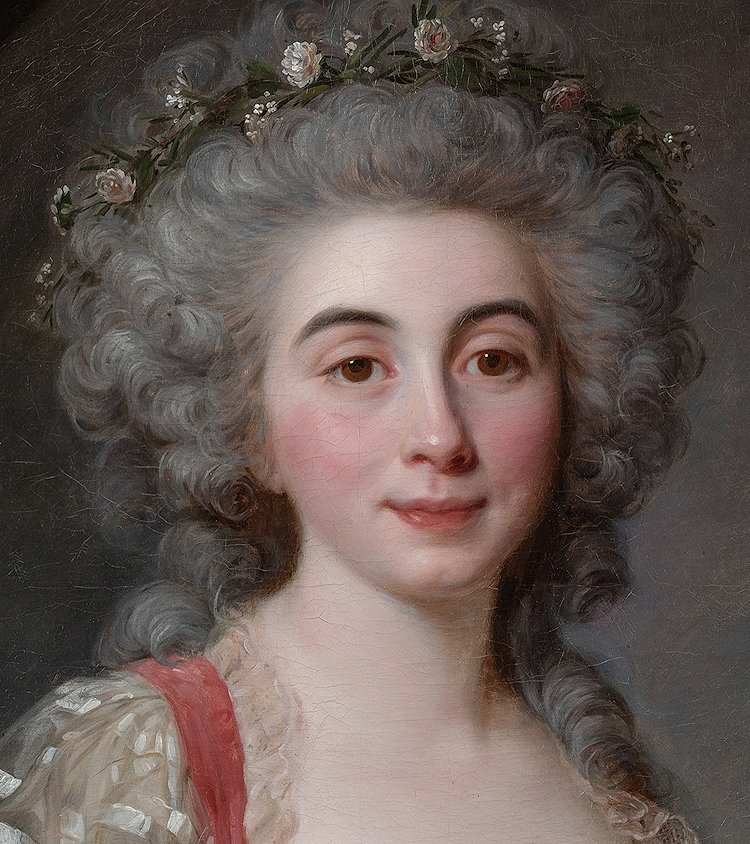
Caroline Lefebvre, vicomtesse de Fontanges, by Antoine Vestier, 1787.
Isabella of Portugal, workshop of Rogier van der Weyden, circa 1450.
Louise de Kérouaille, Duchess of Portsmouth, by Philippe Vignon, circa 1673.
Duchess Louise Charlotte of Mecklenburg-Schwerin, Hereditary Princess of Saxe-Gotha-Altenburg, unknown miniaturist, 1799.
Victoria, Princess Royal, Crown Princess Frederick William of Prussia, by Joseph Hartmann, 1858.
Portrait of a girl aged six holding a book of music, English School,1589.
Mrs. Mary Robinson, by Sir Joshua Reynolds, circa 1783-84.
Study for the above.
Princess Alexandra of Edinburgh, Princess of Hohenlohe-Langenburg, by Heinrich von Angeli, 1898.
Portrait of a Lady, traditionally identified as Louise de Lorraine, by Jean de Court (formerly attributed to François Clouet), circa 1570-79.
Matilde Juva Branca, by Francesco Hayez, 1851.
Selina, Lady Skipwith, by Joshua Reynolds, 1787.
Marie Dorothée Renouard, by Johann Friedrich August Tischbein, 1793.
Repòs, by Marisa Roësset Velasco, 1928.
Madame Hurault de Sorbée, née Elisabeth Kastner (called Lisbeth), by Alexandre-François Caminade, circa 1812.
 Princess Charlotte of Belgium, Archduchess of Austria, later Empress Carlota of Mexico, by Jean-François Portaels, 1857.
Her toilette is an interpretation of the regional costume of Brianza; her husband Maximilian was viceroy of the Kingdom of Lombardy-Venetia from 1857 to 1859.
Queen Elizabeth I, attributed to George Gower, possibly circa 1567.
 The actress Rachel (née Elisa-Félix) as Catherine the Great in Eugène Scribe's La Czarine, by Edmond-Aimé-Florentin Geffroy, 1855.
Princess Karoline Friederike Wilhelmine of Hesse-Kassel, by Friedrich Bury, 1820.
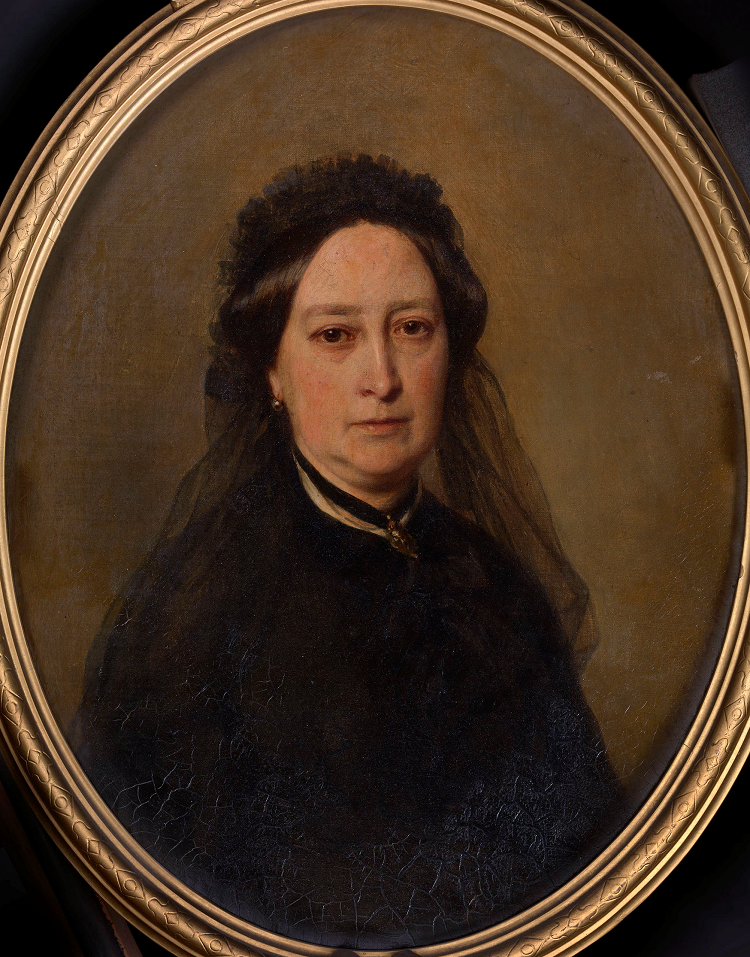
Elisabeth Alexandrine Maria Berthier, Princess of Wagram, by Franz Xaver Winterhalter, circa 1870.
Flora, a portrait of either Vittoria della Rovere from 1639, or of Isabella d'Este from circa 1650-60, by Justus Sustermans.
Tommasina Balbi Cambiaso, by Anton Raphael Mengs, 1771.
Wilhelmine Begas, the artist's wife, by Carl Joseph Begas, 1828.
A young princess (probably Dorothea of Denmark), by Jan Gossaert, circa 1530-32.
Portrait of a lady in green turban, by Aimée Brune-Pagès, 1834.
Anna Maria Vasa, daughter of King Sigismund III of Poland, by Martin Kober, 1596. Three years old in the painting, she died at seven.
Marie-Anne-Éléonore-Félicité le Planquois, by Alexander Roslin, circa 1769.
Creole in a Red Turban, by Jacques Guillaume Lucien Amans, circa 1840.
Virginie Lupin, the wife of prefect Achille François Bégé, by Louis Hersent, circa 1825-30.
Maria Leopoldine von Habsburg-Tirol, Holy Roman Empress, by Justus Sustermans, circa 1647-50.


Friday, April 10, 2020

A ball at Versailles - two watercolors by Victor Joseph Chavet, 1855


In August 1855 Queen Victoria and Prince Albert spent ten days in Paris at the invitation of Napoléon III and the Empress Eugénie. The state visit was meant to celebrate the military alliance between Britain and France during the Crimean War, and followed a visit by the imperial couple to Windsor in April of that same year. On 25 August there was a ball at the Château de Versailles, the first to be held there since the French Revolution. There were twelve hundred guests, and Queen Victoria described the Galerie des Glaces as "full of people & one blaze of light from endless lustres, wreaths of flowers hanging down from the ceiling."

The Overture to the Ball in the Galerie des Glaces, Versailles, 25 August 1855.
Standing at right is Princess Mathilde, cousin of the Emperor, with Prince Albert. Behind them is Princess Mathilde's brother, Prince Napoléon, "Plon-Plon";
both men wear the red sash of the Légion d'honneur. At far right is Albert Edward, Prince of Wales, the future Edward VII.
Queen Victoria stands with the Emperor - both wearing the blue riband of the Order of the Garter; he had been invested during the Imperial couple's visit to Great
Britain four months previously - along with her daughter Victoria, Princess Royal. The Empress is seated behind them. After a previous miscarriage, the Empress
was newly pregnant with what would be her first and only child, and special allowance was made for her - literally - delicate condition.

*

The Promenade in the Galerie des Glaces, Versailles, 25 August, 1855.

The second watercolor shows the procession through the Galerie, which continued into the State Apartments and through the north wing to the Opéra royal, where supper was served.

Queen Victoria and the Emperor are followed by the Empress and Prince Albert, then by other members of both families.

The two watercolors by Victor Joseph Chavet (1822-1906) were a gift from the French Emperor and Empress to their British counterparts, Christmas, 1855.


Sunday, July 28, 2019

Victoria's relations - a selection of portraits by Winterhalter from the Royal Collection


Children, mothers, aunts, half-sisters, cousins, in-laws.... (And what's the daughter of a half-sister? A "half-niece"...?)

Prince Leopold (1853-1884), 1854. Victoria and Albert's fourth son, the eighth of nine children.
Prince Leopold suffered from hemophilia - the first occurrence in the family of the disease - and would die aged only thirty.
George, Duke of Cambridge (1819-1904), 1852. Victoria's first cousin on her father's side.
(And to those who say Winterhalter wasn't adept at portraits of men...?)
Princess Mary of Cambridge (1833-1897), 1846. Victoria's first cousin on her father's side. 
Princess Mary was only thirteen when this portrait was painted. She was later the mother of Queen Mary.
 Count Alexander of Mensdorff-Pouilly (1813-71), 1847. First cousin of both Victoria and Albert, on her mother's and his father's side.
Prince Leopold of Saxe-Coburg-Gotha (1824-1884), 1850. First cousin of both Victoria and Albert, on her mother's and his father's side.
Queen Victoria, 1845.
Prince Albert, 1845. Of course Victoria and Albert were first cousins as well; her mother and his father were siblings.
Augusta of Saxe-Weimar, Princess of Prussia, later Queen of Prussia and German Empress (1811-1890), 1853. Mother-in-law of the Princess Royal.
Princess Louise of Prussia, later Grand Duchess of Baden (1838-1923), 1851. Daughter of the above.
Friedrich Wilhelm, Crown Prince of Prussia, later Emperor Friedrich III of Germany (1831-88), 1867. Brother of the above and husband of the Princess Royal.
Victoria, Princess Royal, later Crown Princess of Prussia and Empress Friedrich of Germany (1840-1901), 1857. Victoria and Albert's first born.
The Duchess of Kent (1786-1861), 1844. Queen Victoria's mother. A study for Winterhalter's painting "The Reception of King Louis-Philippe."
The Duchess of Kent, 1857.
Prince Arthur (1850-1942), 1851. Victoria and Albert's third son, seventh of nine children.
Princess Helena, later Princess Christian of Schleswig-Holstein (1846-1923), 1861. Victoria and Albert's third daughter and fifth child.
Princess Helena, 1865. 
Prince Christian of Schleswig-Holstein (1831-1917), 1866. Husband of Princess Helena.
Juliane, Princess of Saxe-Coburg-Saalfield, Grand Duchess Anna Feodorovna of Russia (1781-1860), 1848. Aunt to both Victoria and Albert.
Prince Ludwig August of Saxe-Coburg-Gotha (1845-1907), 1849. First cousin once removed of both Victoria and Albert.
"The Cousins": Queen Victoria and Victoire, duchesse de Nemours (1822-1857), 1852. The duchesse de Nemours was first cousin to both Victoria and Albert.
Princess Alice, later Grand Duchess of Hesse and by Rhine (1843-1878), 1861. Victoria and Albert's second daughter and third child.
Prince Louis of Hesse, later Grand Duke Louis IV of Hesse (1837-1892), 1861. Princes Alice's husband.
Feodora, Princess of Hohenlohe-Langenburg (1807-72), 1872. Queen Victoria's half-sister. (Painted in the year of her death.)
Princess Adelheid of Hohenlohe-Langenburg, later Duchess of Schleswig-Holstein (1835-1900), 1853. Daughter of the above.
Princess Feodora of Hohenlohe-Langenburg, later Duchess of Saxe-Meiningen (1839-1872), 1855. Sister of the above.