L a - b e a u t é - s a u v e r a - l e - m o n d e ~ D o s t o ï e v s k i

L a - b e a u t é - s a u v e r a - l e - m o n d e  ~  D o s t o ï e v s k i


Showing posts with label Federico de Madrazo y Kuntz. Show all posts

Sunday, September 19, 2021

In the medina - Moroccan portraits by Josep Tapiró i Baró


I've not included titles and dates on any of these as what information I've been able to gather is incomplete, confused, contradictory, unreliable, unexplainable, untranslatable, or just completely elusive. So I'm going to choke down my pedantic compulsions this go 'round; I expect the unattributed beauty of these exquisite watercolors will more than suffice.

This appears to be unfinished.

*

Josep Tapiró i Baró (17 February 1836, Reus, Catalonia – 4 October 1913, Tangier, Morocco), Catalan painter; best known for his watercolor portraits from Morocco. The son of parents who owned a hardware store, he displayed an early talent for drawing, and his first formal studies began at the age of thirteen with a local wine merchant and amateur painter. In 1853, at the age of seventeen, he and his close friend and fellow student, Marià Fortuny, exhibit their work at the Casino de Reus, and later that year, the pair enrolled at the Escola de la Llotja in Barcelona. At this time, the young artist produced mostly historical and religious scenes. In 1857 he, Fortuny, and two others were given the opportunity to compete for a grant to study in Rome. Fortuny was chosen for the award, while Tapiró moved to Madrid and enrolled at the Escuela Superior de Pintura y Grabado where he studied with Federico de Madrazo. In 1862, he joined Fortuny in Rome and was introduced to his circle of artistic acquaintances. They also visited Naples and Florence together. While there, he took evening classes to learn how to paint watercolors and his works began to focus more on genre themes. These works became very popular and established his reputation. 

In 1871 he, Fortuny, and another artist friend traveled to Tangier, a trip which would prove decisive for his career. Two years later, he held his first showing of Orientalist paintings at the "International Art Circle of Rome". But Fortuny's sudden death the next year affected he deeply, and he decided to leave Rome. Instead of remaining in Spain, in 1876 he settled in Tangier, moving into a newly built home near the medina quarter and later acquiring an old theater to serve as his studio. Although he frequently travelled to exhibitions - as far afield as St. Petersburg and New York - and spent the summers with his family in Reus, he would live in Tangier for the rest of his life. In 1886, he married twenty-year-old Maria Manuela Valerega Cano, a Tangier native of Italian ancestry, thirty years his junior. Shortly after, a friend of his wife's died and they adopted her orphaned son. 

Later in life, he began having respiratory and cardiovascular problems due to a lung infection he had contracted in 1903. He often did not have sufficient energy for work, and traveling also became very difficult. The financial situation was aggravated as well by a sharp decrease in the number of foreign visitors and tourists caused by political upheaval in the region. In 1907, he and his wife rented a house in Madrid in an effort to promote his work at an exhibition of the Círculo de Bellas Artes. His health problems eventually led to his death six years later at the age of seventy-seven. Initially, he was buried in Tangier but, in 1921, the government of Reus demanded that his body be brought back to his place of birth. Only twenty-six years later, in 1947, his remains were finally returned to Reus and reinterred near his friend Fortuny. 

I couldn't find a larger version of this, but I thought it was too beautiful not to include.


Sunday, May 10, 2020

Randomly XVII


 A charcoal burner of the Transatlantic Company of Fort-de-France, Martinique, circa 1900.
Portrait of madame Larmoyer, by Antoine Vestier, 1804.
Courtesy Stephen Rutledge.
 In Poppyland, by John Ottis Adams, 1901.
Courtesy "Andre Duveen."
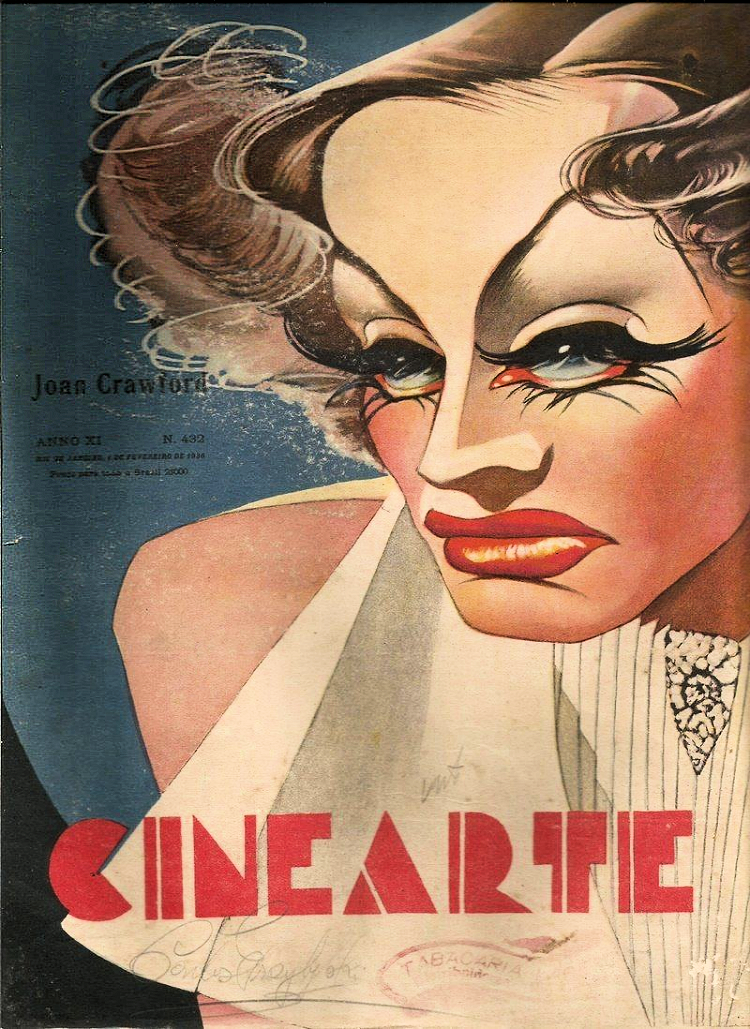
Caricature of Joan Crawford on the cover of Cinearte, February 1936.
 The Farmer in the Artist’s Studio, by Heinrich von Rustige, circa 1839.
Portrait of the Danish Naval officer Louis de Coninck, by Friedrich Carl Gröger, circa first quarter of the nineteenth century.
Self-portrait, by Salomon Adler, circa second half of the seventeenth century.
 Self-portrait, by Judith Leyster, circa 1630.
The Allegory of Painting, by Gerrit van Honthorst, 1648.
Wrestling Match, by Michiel Sweerts, 1649.
Fighting Putti, by Guido Reni, 1625.
"Joe Stecher demonstrates head scissors", 1918.
Semele and Jupiter, by Paolo Pagani, circa 1693.
 Portrait of Federico II Gonzaga, by Titian, circa 1529.
 Bust of Caracalla, Italian, nineteenth century.
Courtesy Ralf De Jonge.
Capt. William T. Shorey and his wife Julia Shelton, with their daughters Zenobia and Victoria, circa 1910.
La Familia Basabe, Julio Romero de Torres, 1919. 
Nature morte aux citrons, by François-Emile Barraud, 1921.
Atalanta’s Eclipse, by Charles Meere, 1938.
Courtesy Stephen Rutledge.
Portrait of Luiza Pesjak, by Mihael Stroj, 1855.
Netherlandish artist, active in England, circa 1600.
Bildnis eines jungen Mannes, by Auguste Alexius Canzi, 1832.
Miškinė in Lithuania, by Petras Kalpokas, 1945.
Josefa del Águila y Ceballos Alvarado y Álvarez de Faria, wife of José de Narváez Porcel, II vizconde de Aliatar, by Federico de Madrazo y Kuntz, 1852.
The Blacksmith, by Frank Leyendecker, 1922 (?).
Academic male nude, by Théodore Géricault, circa first quarter of the nineteenth century.
 The Annunciation  to the Shepherds, attributed to Théodore Gericault, circa first quarter of the nineteenth century.
Charles Ferdinand d'Artois, duc de Berry, en uniforme de la cavalerie noble de l'Armée de Condé pendant son exil à Edimbourg, by Henri-Pierre Danloux, 1796.
The comtesse de Castiglione, by Pierre-Louis Pierson, circa 1865. (Two images.)
Amity, by Bernard Fleetwood-Walker, 1933.
Venus and Adonis, by Arthur Kampf, 1939.
Courtesy Ralf De Jonge.
 Blue Landscape, by Stefan Popescu, 1913.
Cain Killing Abel, by Bartolomeo Manfredi, circa 1610.
Cain and Abel, by Svend Rathsack, 1910.
Three window dressers, by John Rutherford Boyd, circa 1930s.
Portrait of Laura Colton Chapin, by William Sidney Mount, 1833.
Columbia Varsity Eight at the Poughkeepsie Boathouse, 1910.
Courtesy Stephen Rutledge.
Antoine Philippe de La Trémoille, Prince de Talmont, by Léon Cogniet, copy after Guérin, commissioned by Charles X in 1826.
Sweden, 1943.
"Mrs. Hugh J. Chisholm Jr. (Bridget Bate Tichenor) in a coat of red and black broadcloth, red silk jersey dress. From Nicole de Paris.”, by Horst P. Horst, 1939.
Courtesy Paul Ellis.
Portrait of a Lady, by Konstantin Egorovich Makovsky, 1883.
Daguerreotype portrait of an Iroquois man with hand painted detail, circa 1852.
The guardsman Alexei Yakovlevich Okhotnikov, reputed lover of Empress Elisaveta Alexeievna, unknown artist, before 1807.
The Artist's Wife, by Charles Haigh-Wood, circa 1890s.
Nu masculin de dos, by Edouard Antoine Naudin, 1840.
Unknown title, by Kenne Grégoire, circa 2010.
Ernest Long, marine engineer, arrested for "crossdressing", 1922.
Gamblers, by Pavel Fedotov, 1852.
Portrait of the marquise de Grollier, by Elisabeth-Louise Vigée Le Brun, 1788.