L a - b e a u t é - s a u v e r a - l e - m o n d e ~ D o s t o ï e v s k i

L a - b e a u t é - s a u v e r a - l e - m o n d e  ~  D o s t o ï e v s k i


Showing posts with label Élisabeth Louise Vigée Le Brun. Show all posts

Sunday, November 2, 2025

Favourites - best friends of the queen, dressed "en gaulle," portraits by Vigée Le Brun, 1782


Until just weeks ago, even with an obsession begun in childhood with all things Marie Antoinette and the last days of the ancien régime, it had never registered with me that the queen's two closest friends - the famous "favourites" - had been born on the very same day: 8 September 1749. 

Marie-Thérèse Louise, princesse de Lamballe.

Marie-Thérèse Louise, princesse de Lamballe (8 September 1749 - 3 September 1792) had already been widowed at the age of nineteen when, two years later, she met the fourteen year-old dauphine upon the latter's arrival in France in 1770. The two became immediate and very close friends. 

Yolande Martine Gabrielle de Polastron, duchesse de Polignac.

Yolande Martine Gabrielle de Polastron, duchesse de Polignac (8 September 1749 - 9 December 1793) was formally presented to Marie Antoinette five years later. The new queen was said to be "dazzled" by Gabrielle and agreed to pay the Polignac family's debts so that the new "favourite" could afford to reside at Versailles. Beautiful and charming, she quickly became the undisputed leader of the queen's intimate circle. 


Marie-Thérèse was very wealthy in her own right. But she was more reserved than the queen's new friend, kind but not at all brilliant. And her own ill-health and that of her father-in-law often kept her away from Versailles, leaving the way for the more vivacious Gabrielle to dominate the queen's affections. The two women never really got along, though both would suffer in the ever increasing scurrilous assaults on the queen's character; among other slanders, both were falsely accused in the libels of being her lesbian lover. 


Over time, the entire Polignac family benefited enormously from the queen's considerable generosity, causing much resentment at court. Marie Antoinette, herself, eventually tired of their constant demands for money and privileges, their frequent attempts to influence political matters and, after the queen's second son was born in 1785, her relationship with Gabrielle distinctly cooled. Not long after, she and Marie-Thérèse began to grow closer again.


At the fall of the Bastille, well aware of the public's hatred, Gabrielle and all the members of the Polignac family went into exile, first to Switzerland, then Turin, Rome, Venice and, finally, Vienna. After the king and queen were removed to Paris in October 1789, Marie-Thérèse immediately joined the royal family in the Tuileries Palace, reassuming her court duties; she was constantly at their sides during the next two years. Following the disastrous Flight to Varennes of the royal family in June 1791, she travelled to Brussels, then England. Though the queen repeatedly asked her not to return to France, she rejoined the royal family some four months later. 


After the attack on the Tuileries the following August, and after the royal family was moved to the Temple, she was separated from them and transferred to the La Force prison. A month later, during what became known as the September Massacres, the prisons were seized by mobs, and the prisoners were placed before hastily assembled people's tribunals, which judged and executed them summarily. Brought before the tribunal, she agreed to take the oath to liberty but refused to denounce the king and queen, and she was handed over to the mob. 


There are many horrific and varying stories about the exact manner of her murder, most of which are certainly apocryphal. What is known for certain is that her head was placed on a pike, paraded through the streets of Paris to the windows of the Temple, where the mob unsuccessfully tried to force the queen to look at the mutilated remains of her friend. The princesse de Lamballe was five days away from her forty-third birthday.


Since her flight from Paris, Gabrielle had kept in contact with the queen through their correspondence. She had been in poor health for several years, but had become increasingly ill while living in Switzerland. The duchesse de Polignac died in Vienna, probably of cancer, at the age of forty-four, shortly after learning of Marie Antoinette's execution, two months before.

*

A self-portrait of the artist, circa 1781-82.

By the early 1780's the star portraitist of the day, Vigée-Le Brun, had developed a new and very particular pictorial formula that she employed several times in the portrayal of the young, royal and aristocratic ladies who were her most important clients; this eventually even included the queen. 

A second portrait of the duchesse de Polignac, 1783.

Rather than posing them in sumptuous gowns and lavish jewels, she portrayed them very simply dressed, often wearing a straw hat, with wild flowers in their hands or in their hair; they appeared as one might see them walking in the summery gardens of the queen's own Petit Trianon.

Marie Antoinette's early nemesis, Jeanne Bécu, comtesse du Barry, 1781.

Of particular note was the style of gown they wore, dubbed variously as à la Creoleen chemise or, most frequently and lastingly, en gaulle. Consisting of multiple layers of very fine muslin, with softly gathered, puffed sleeves, a ruffled neckline, and an unfitted bodice, it featured a simple satin sash at the waist. It became a very popular style, a fashion that spread well beyond France and the artist's lofty clientele. 

The queen's sister-in-law, the comtesse de Provence, 1782-83. Like the portrait of Marie Antoinette en gaulle, this was also met with disapproval at the 1783 Salon.

But when Vigée-Le Brun's portrait of the queen dressed en gaulle was displayed at the Paris Salon in 1783, the public was outraged. The inspiration behind the alternate moniker, en chemise - a term denoting a lady's shift; in other words, her underwear - was definitely taken to heart. 

Marie Antoinette en gaulle, 1783.

The alarm was so great, the cry being that the queen was being shown in her underthings, that the portrait was removed from the wall and the artist hastily painted another to be exhibited before the close of the Salon. In the second, the queen assumes the same pose, tenderly holding a pink rose, but now less offensively - in other words, more regally - dressed in gray silk and lace.

The queen as the public demanded she be seen, 1783.


Friday, November 24, 2023

"Still-Life with Attributes of Art" - two paintings by Zinaida Serebriakova, 1922

 
*

*

As I've stated elsewhere, I've never liked the work of Zinaida Serebriakova. I always try and celebrate women artists - mostly painters - who history has all too often ignored. Serebriakova, at least, doesn't really fall into the category of the ignored and forgotten. But there's just something about her work that rubs me the wrong way. I find it rather flat and, at the same time, vaguely exaggerated, even slightly cartoonish. And then she suffers from a bit of "Vigée Le Brun-itis"; her portraits all sort of look alike, and all sort of like her. All that said, I rather like these two identically titled, very sober, and atypical still-lifes. 


Friday, December 30, 2022

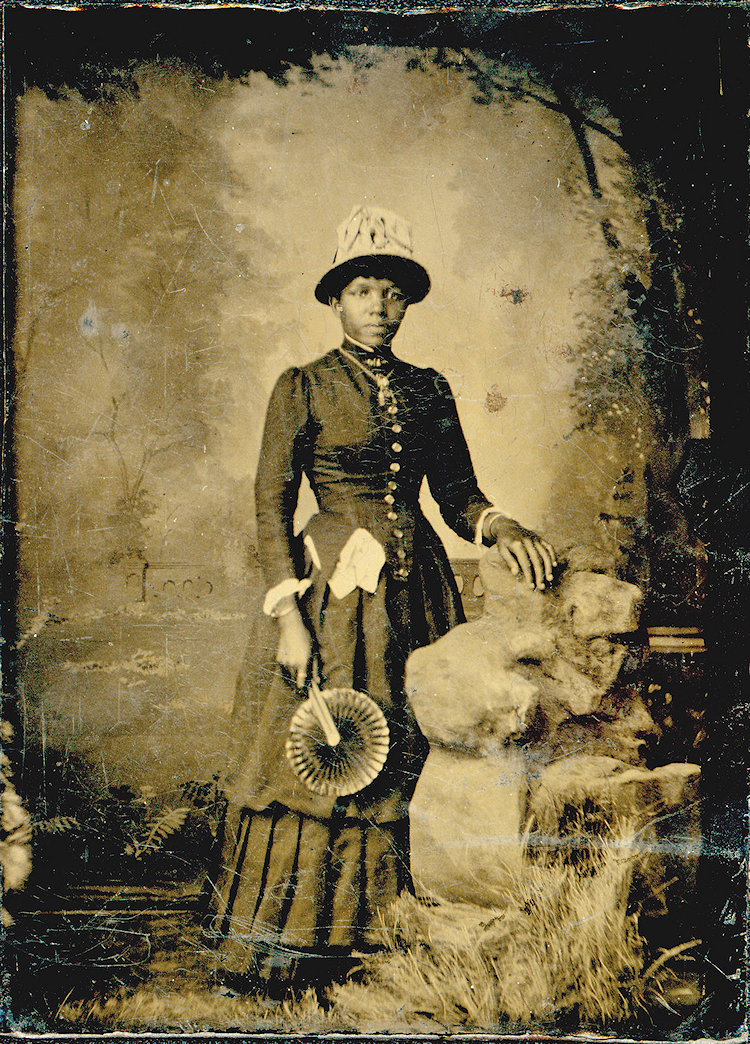
En pied - ten ladies standing

 
Unknown, tintype, circa 1880s.
Grand Duchess Elizaveta Alexeievna née Princess Louise of Baden, by Élisabeth Louise Vigée Le Brun, 1795.
Japanese, eighteenth century.
Mrs. Elliott Fitch Shepard née Margaret Louisa Vanderbilt, by John Singer Sargent, 1888.
Portrait en pied d'une élégante au châle noir sur fond de paysage, by Fernand Toussaint, circe 1920s.
Unknown, circa 1850s.
Margherita Sparapani Gentili Boccapadule, by Laurent Pécheux, 1777.
Isabella Stewart Gardner in Venice, by Anders Zorn, 1894.
Portrait d’une femme peintre en pied, French School, circle of Marguerite Gérard, circa 1800.
"Portrait of a richly dressed young lady, full-length, before a draped table", by Pieter Codde, circa 1635.


Friday, March 29, 2019

The ambassador from Mysore - a portrait of Muhammad Dervish Khan by Vigée Le Brun, 1788


On 30 January, during Sotheby's Master Paintings Evening Sale, Élisabeth Louise Vigée Le Brun's striking portrait of Muhammad Dervish Khan, an Indian ambassador to France, sold for an astounding $7.2 million, setting a new world auction record for any female artist of the pre-modern era.


From Sotheby's auction notes:

On July 16, 1788, almost a year to the day before the storming of the Bastille, three ambassadors from Mysore, India, arrived in Paris. Muhammed Dervish Khan, the lead ambassador and subject of Vigée Le Brun's portrait, along with the scholar Akbar Ali Khan and the elder Muhammed Osman Khan, were sent by Tipu Sultan, the powerful ruler of Mysore (1750-1799) who sought the support of Louis XVI in an effort to drive the British out of India, unaware that Louis XVI’s power was beginning to deteriorate, and that the King’s taste for extravagant foreign goods over those made at home was stirring up tensions in the country.

In this volatile political climate the three ambassadors' arrival nevertheless caused a sensation in Paris as they made their way to Versailles, with local newspapers like the Journal de Paris reporting on the ambassadors’ whereabouts almost daily. In 1788, Vigée Le Brun, who was at the height of her fame and influence among the powerful elite of Paris and Versailles, saw the ambassadors at the Opera. She recalled of the encounter, “I saw these Indians at the opera and they appeared to me so remarkably picturesque that I thought I should like to paint them. But as they communicated to their interpreter that they would never allow themselves to be painted unless the request came from the King, I managed to secure that favour from His Majesty.”

As Muslim men, the ambassadors being represented pictorially, let alone by a female artist, was unheard of, however after the request came from the King, they agreed to sit for her at their hôtel in Paris. She painted Dervish Khan first, “standing, with his hand on his dagger. He threw himself into such an easy, natural position of his own accord that I did not make him change it.”

The resulting portrait of Dervish Khan.. is an extraordinary reflection on a French woman’s perception of a powerful Indian man. The intensity in which Dervish Khan is portrayed is unlike any other portrait by Vigée. There is an initial element of fierceness in the portrait, but the elegance and grandeur of the costume overcomes that. He wears the traditional costume that so enamored the French men and particularly women who encountered his embassy, so fascinated by the Indian fabrics which were making their way into French fashions. Indeed this sheer, layered white muslin recalls the dress scandalously worn by Marie-Antoinette in a portrait painted by Vigée a few years prior.

However, the turmoil had only just begun. When the painting had finished drying, Vigée sent for the works but was refused; Dervish Khan had hidden his portrait behind the bed. The ever-resourceful Vigée strategically convinced his servant to steal it back for her, only to later hear that Dervish Khan had then planned to murder the servant for this transgression. Dervish Khan was only mollified when he was falsely reassured that it was the King who wanted the portrait.

Back in the artist's possession the painting was exhibited at the Salon of 1789, opening in August, amid a disquieting political climate and was received by the public with immense curiosity and critical acclaim. By October, however, Vigée had fled Paris in fear of her life after mobs had invaded Versailles. It can be surmised that she kept the work in her personal collection but left it at home in France when she went to Italy, given that the painting next appears in the estate sale of her husband, Jean-Baptiste Pierre Le Brun.

Dervish Khan met an even more fateful demise. The embassy did not achieve their goal of a treaty with France and upon return to Mysore the ambassadors were beheaded for their failure. These years marked a turning point in Europe’s relationship with India; while a mutual exoticism and fascination was nurtured for the centuries leading up to this point, by 1799 the divide of “East” and “West” had shifted into an attitude of superiority by the Europeans as they continued to expand and colonize.

Vigée’s haunting portrait of Dervish Khan is compelling for many reasons, particularly as it captures this very unique moment in history. On the eve of Revolution, a female artist in France gloriously captures a striking foreigner, a Muslim ambassador from India, as he encounters the exotic world of Paris: in hindsight, the portrait is even more powerful than the sitter himself had hoped to be portrayed.


Sunday, January 28, 2018

Random females - a selection of portraits


Portrait of a Young Lady in a Blue Dress, by Franz Schrotzberg, circa 1830s.
Anonymous Daguerreotype, circa 1840s-50s.
Mrs. Francine Clore, née Halphen, by Sir James Gunn, circa 1940.
Geertruida the Dubbelde, wife of Aert van Nes, by Bartholomeus van der Helst (background by Ludolf Bakhuysen), 1668.
Marie Caroline, duchesse de Berry, in the gardens of the Château de Bagatelle in the Bois de Boulogne, by Baron Gérard, 1820.
"The Blue Veil", by Glauco Cambon, 1907.
Joséphine Baker, by Baron George Hoyningen-Huene, 1929.
Celeste Coltellini, Madame Meuricoffre, by Antoine-Jean Gros, 1790s.
Doña María Antonia Gonzaga de Caracciolo, marquesa viuda de Villafranca, by Francisco Goya y Lucientes, circa 1795.
Irene von Meyendorff, circa 1941-44.
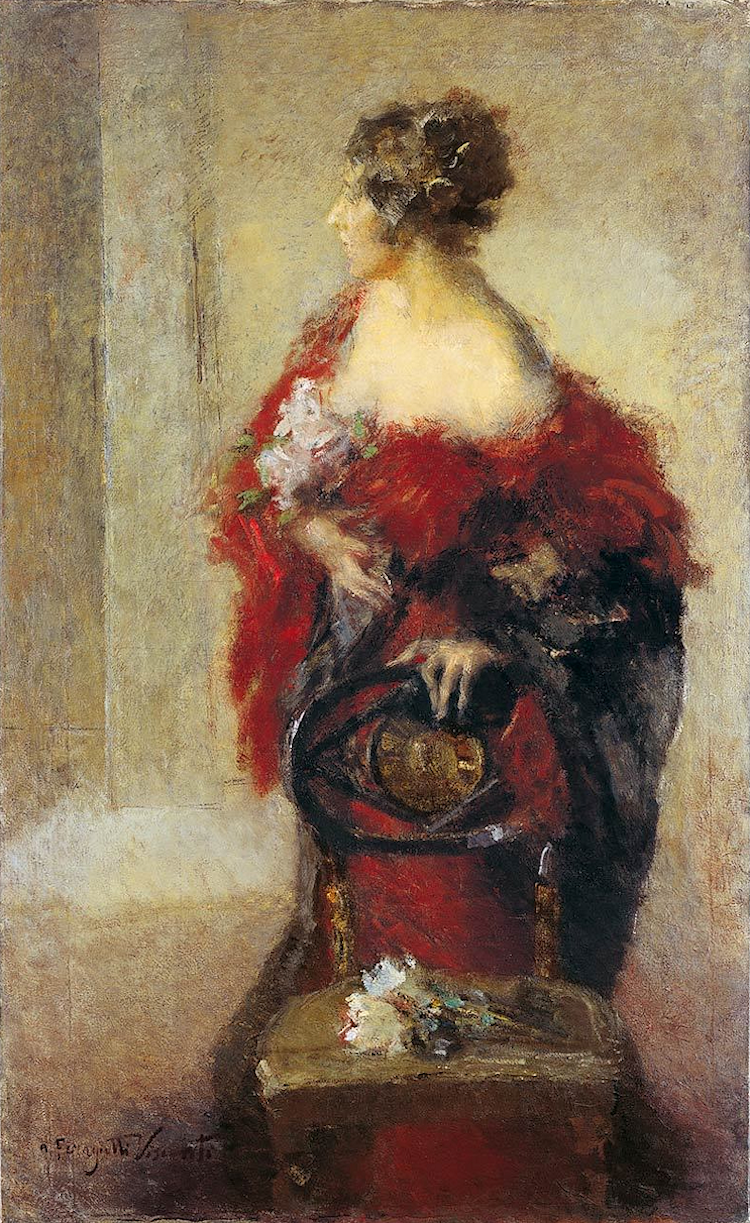
"Portrait in Red", by Adolfo Feragutti Visconti, 1915.
Duchess Charlotte Frederica of Mecklenburg-Schwerin as a child, by Christoph Friedrich Reinhold Lisiewski, 1791.
"Portrait d'une princesse de Bragance", Gillot Saint-Èvre, 1832.
Princess Egon von Ratibor, née Princess Leopoldine Lobkowicz, by Philip de László, 1899.
Minnie, the wife of Harold Alzana (seated behind), in costume for the "Gold Rush" tableau, 1949.
Mrs. Daniel DeSaussure Bacot, by Samuel F. B. Morse, 1820.
Anna Pavlovna of Russia, Queen of the Netherlands, by François Joseph Kinson, 1824.
 Marie Madeleine Maret, née Léjéas, duchesse de Bassano, by Baron Gérard, circa 1805-10.
Court Lady, by Diego Velázquez, circa 1635.
Marie Henriette, duchesse de Brabant, later Queen of the Belgians, Sir William Ross, 1853.
Rachel, Countess of Dudley, née Gurney, wife of the 2nd Earl, circa 1911. (The photograph is dated "1911", but may have been taken earlier.)
"Madame P.", by Eugène Fichel, 1857.
Madame de Serres, by Joseph Boze, 1787.
Portrait of an Unknown Lady, circa 1830s.
Unknown Woman, by Carl Timoleon von Neff, 1845.
Princess Maria Cristina Amelia Teresa of Naples and Sicily, later Queen of Sardinia, by Élisabeth Louise Vigée Le Brun, 1790.
Unknown subject and artist, circa 1690-1700.
The Reventlow Sisters, Malvina and Hilda, by Heinrich August Georg Schiøtt, circa 1850.
Adriana Jacobusdr Hinlopen, wife of Johannes Wijbrants, by Lodewijk van der Helst, 1667.
"A Portrait of a Beauty", Qing Dynasty, Nineteenth Century.
Portrait of a Lady In a Blue Dress, by Anton Ebert, 1893.
Unknown, circa 1860. Courtesy Ralf de Jonge.
Portrait of an Unknown Woman, by Alexander Grigoryevich Varnek, circa 1810s-20s.
Self-portrait by Therese Concordia Mengs Maron, sister of Anton Raphael Mengs, and wife to another painter, Anton von Maron, circa 1744-45.