L a - b e a u t é - s a u v e r a - l e - m o n d e ~ D o s t o ï e v s k i

L a - b e a u t é - s a u v e r a - l e - m o n d e  ~  D o s t o ï e v s k i


Sunday, October 20, 2013

Charles James' "Butterfly" dress, 1955


Charles James (July 18, 1906, Sandhurst - September 23, 1978, New York City), American fashion designer.

This dress, one of James' most famous creations and a marvel of draping and structure, weighs 18 pounds and uses twenty-five yards of tulle.


Saturday, October 19, 2013

Two great "Latin Lovers" of the silent screen - one born, one fabricated - Moreno and Cortez


Antonio Moreno
Ricardo Cortez

***

Antonio Moreno (September 26, 1887, Madrid – February 15, 1967, Beverly Hills), born Antonio Garrido Monteagudo, was a popular matinee idol by 1915 and remained so throughout the Twenties.  When sound came in, his heavy accent proved a handicap.  He turned to directing and made several popular films in Mexico, then returned to the States and transitioned into character parts.  He went on to have 151 screen credits.


***

Ricardo Cortez (September 19, 1900, New York City – April 28, 1977, New York City), born Jacob Krantz to Jewish parents, was an amateur boxer and worked on Wall Street before turning to acting.  By the mid-Twenties he was a popular leading man and transitioned easily when the "talkies" arrived.  Later, as his career wound down, he retired from films and returned, successfully, to Wall Street.  His screen career totaled 102 films.


***

Trivia:  Ricardo Cortez starred with Greta Garbo in her first American film, The Torrent, in 1926.  He was her first and last co-star to have his name above hers in the title credits.  Garbo always had top billing after this, her first film.  As to Cortez' faked Spanish origins, when rumors started up that he wasn't what his name implied, the studio tried to put it across that he was actually French, before finally making the "admission" that he was really born in Vienna.


Antonio Moreno starred with Greta Garbo in her second American film, The Temptress, also in 1926.  After a considerable amount of footage was exposed, the film's director, Garbo's mentor Mauritz Stiller, was fired and the film entirely re-shot.  Many extant stills from The Temptress are actually from the aborted version, showing Garbo in different costumes and Moreno without a mustache.

Moreno, sans moustache, with Garbo in a scene not repeated in the second version of The Temptress.

Mauritz Stiller directing Garbo and Moreno in the unfinished first version of The Temptress.

A rather racy scene from the completed film.


Friday, October 18, 2013

"A View of Naples Through a Window", 1824


Franz Ludwig Catel (February 22, 1778, Berlin - December 19, 1856, Rome), a German painter who spent most of his career in Rome.


Thursday, October 17, 2013

Trois Musiciens


Antoine Vestier (April 28, 1740, Avallon – December 24, 1824, Paris)
 
Rose Renaut, singer, 1791
Cellist, 1788
Mademoiselle Rouillé at the pianoforte, 1792


Wednesday, October 16, 2013

Visconti and Delon


Luchino Visconti by Horst P. Horst, 1936

Alain Delon by Cecil Beaton, 1960

Tuesday, October 15, 2013

Louis Gauffier (1762, Poitiers –1801, Florence)


Gauffier studied in Paris but, after winning the Prix de Rome in 1784, and apart from a brief return to the French capital in 1789, he would remain in Italy for the remainder of his life.  During unrest in Rome in 1793, a reaction to the revolution in France, he and his wife were forced to flee to Florence.  There, he painted landscapes and portraits, most often for English tourists.  He began to paint portraits of French military officers when, in 1799, French troops occupied Florence.  Gauffier died there two years later, at the age of 39.

"Portrait of an officer, thought to be General Jean-Claude Moreau"
Thomas Penrose, 1798
Gustaf Mauritz Armfelt, Swedish ambassador to Naples, and his son Gustav Magnus, 1793
 "Portrait d'un chasseur avec ses chiens dans un paysage, dit Portrait d'Alexandre Dumas pere"
 Ferdinando (di Jacopo) Nerli, 1799
André-François Miot, envoy of the French Republic to the Grand Duke of Tuscany, and his Family, 1797
 Philippe-Henri Coclers, 1797
Prince Augustus Frederick, Duke of Sussex, 1793
Johan Claes Lagersvärd, 1799
 Lord Godfrey Webster, 1794


Monday, October 14, 2013

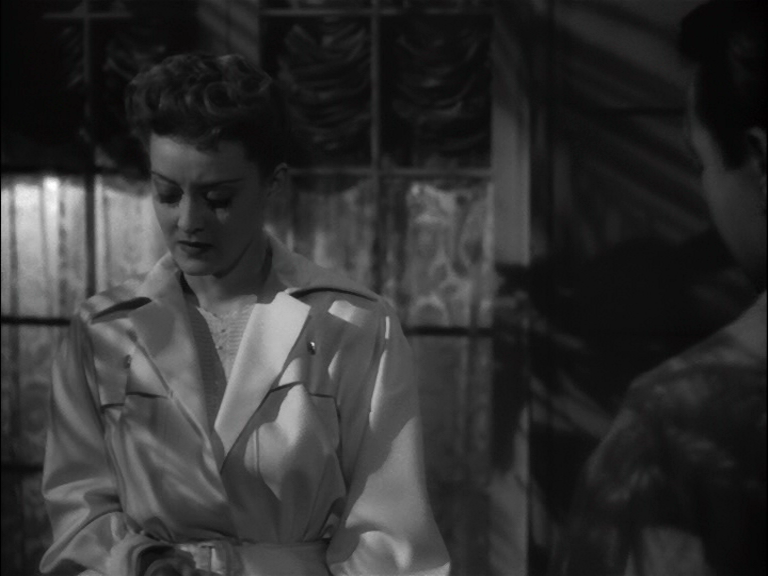
The awfully chic Bette Davis of Now, Voyager


Bette Davis was never a "glamor girl".  (No matter how much, early on, Warner Brothers tried to force her into that mold.)  She was an actress, full stop.  As far as she was concerned, her on-screen appearance should always only be dictated by the needs of her characterization.  And though, while never a regular beauty, she could certainly be attractive on film, there was probably only one role in her career where it was actually so important that she be - eventually, anyway - quite chic, even glamorous.  That would be as the transformed Aunt Charlotte of 1942's Now, Voyager.

G and I watched Now, Voyager again the other night; when choosing it, I told her it was one of those films that I can watch over and over, without ever tiring of it.  It's just gloriously preposterous, of course, but one of the joys of watching it is the wonder of how they pulled it off - and so well.  Orry-Kelly was the designer of nearly all her costumes while she was at Warner Brothers.  And I was really struck, the other night, by what a great job he did with this film, and just how terrific she looked as the refurbished Charlotte Vale.  And, really, for once that was the point.

As she smokes her cigarette through her veil.  Right before she repeatedly kisses her co-star, Paul
Henreid, through her veil.  I'm not really up on my veil etiquette, but isn't that a bit odd?
I must say, I adore this hat.
Costume test.
Publicity photograph - with her waistline unnecessarily slimmed down.

***

Of course there was this rather unfortunate little number....  The one she wears when she rids herself of her dreary capon of a fiancé, then goes upstairs and "talks mommy dead".  Miss Davis was, unfashionably, rather heavy-busted, and this drape-y, droopy, shrilly patterned dress was further burdened, as it were, by that particular physical characteristic.