L a - b e a u t é - s a u v e r a - l e - m o n d e ~ D o s t o ï e v s k i

L a - b e a u t é - s a u v e r a - l e - m o n d e  ~  D o s t o ï e v s k i


Showing posts with label madame d'Ora. Show all posts

Sunday, February 16, 2025

The countess' charming feet - photographs by Atelier d'Ora, 1916


Schuhe der Gräfin Erdödy bei der Krönung Kaiser Karls zum König von Ungarn - Shoes of Countess Erdödy at the coronation of Emperor Karl as king of Hungary. I can't imagine any explanation for the creation of these decorative though rather peculiar images other than the desire to celebrate this quite fetching pair of shoes; they are portraits of shoes. But to whom did these charming slippers and shapely ankles belong?

Julia, Countess Erdödy, unknown source, circa 1905-10.

The most likely candidate, only identified when the images were found as a "Countess Erdödy," would be the previous Julia Hanby Scott, born in New York in 1858, the wife of Count Gyorgy Maria Gobert Erdödy de Monyorókerék et Monoszló. But is this the sort of pose one might expect of a high-ranking lady of a "certain age"? (Fifty-eight, to be precise.) With her heavily embroidered fur-edged gown lifted up and away to expose the very delicate and exquisitely composed - various filmy laces, ribbon inserts, appliquéd ribbon roses - petticoat?

Julia, Countess Erdödy, and her daughters, Franziska and "Jenny." From The King, published 13 August 1904.

A complicating factor is that the countess' two daughters - "Jenny" and Franziska - were also countesses. And they were also photographed by Atelier d'Ora on the same occasion. But neither young lady wears a gown edged with fur. And the one shoe to be seen making a timid appearance in the second portrait of the sisters does not resemble the shoes in question. So one has to assume the shoe-proud countess is their mother. Unless, of course, there's yet another - and even more elusive - "Countess Erdödy" lurking somewhere...?

Countesses Johanna "Jenny" Margareta Margit Maria Gobertina and Franziska Violet Maria Gobertina Erdödy.
Countess Franziska Violet Maria Gobertina Erdödy.

The occasion, by the way, was the Hungarian coronation of Karl I, Emperor of Austria, King of Hungary, who ascended the throne in November 1916 upon the death of of his great-uncle, Emperor Franz Joseph. The following month, in the midst of WWI, Karl's coronation as king of Hungary was held in Budapest. But then, of course, the Habsburg monarchy was abolished slightly less than two years later, in November of 1918.

*

The text Rohdruck - eigentum des Atelier d'Ora, which is stamped on most of the images, translates to "Raw print - property of Atelier d'Ora."


Sunday, January 22, 2023

Randomly XXV

 
Red Hollyhocks, by John La Farge, 1863.
Unknown, from an album belonging to Mary Adelaide of Cambridge, Duchess of Teck, circa 1860.
The Ghost of a Flea, by William Blake, circa 1819-20.
Jeune femme lisant une lettre près du groupe de putti « lutte pour un coeur » de Falconet,  circle of Marguerite Gérard, circa 1790.
The artist Giovanni Boldini, by Federico Andreotti, circa 1870.
Jeune footballeur, by Ángel Zarraga, 1927.
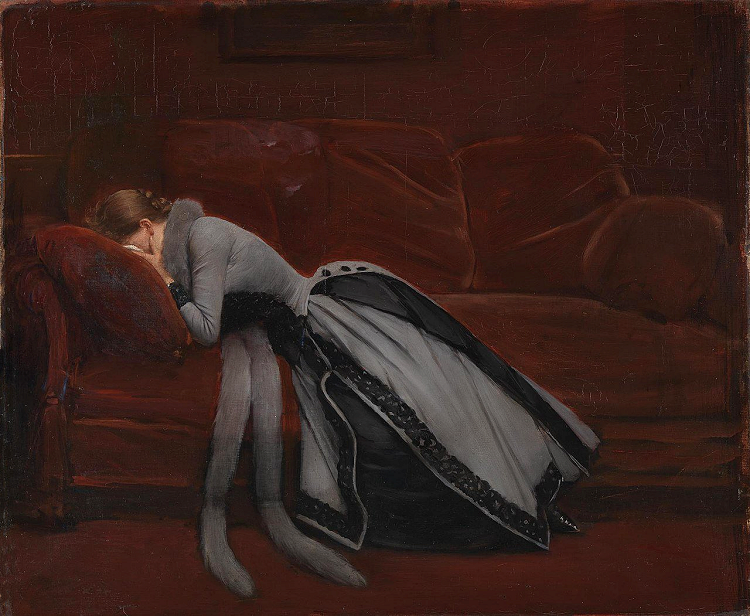
Après la faute, by Jean Béraud, circa 1885-90.
Meiji period photograph of a man in a sedan chair with two attendants on their way to Nikkō in Tochigi Prefecture.
Selection of shells arranged on shelves, by Alexandre Isidore Leroy de Barde, 1810.
Sketch of a man in profile, by Rudolph Friedrich Wasmann, circa 1830.
Allegory of Sacred and Profane Love, by Michele Desubleo, circa 1665-75.
Nude study, by Valdemar Andersen, circa first quarter of the twentieth century.
Alexina Nesbit Sandford née Lindsay and Catherine Hepburne Lindsay, by Andrew Geddes, circa 1838.
L'Admiration !, by comte Olympe Aguado de las Marismas, circa 1860.
Pot de violettes et panier de fraises, by Léon Marie Benoît, 1910.
Jeune femme endormie (inscribed upper left: "Á Jacques et Valentine, paternellement..."), by André Devambez, ND.
Tsuguharu Foujita, by madame d’Ora, 1926.
 Enfant emmaillotté dans un berceau en forme de conque, French School, follower of Jean Nocret, circa 1700.
Golden Fish, by Henri Matisse, 1912.
Carte de visite of a Black Union soldier.
Mrs. Charles Hatchett, by Thomas Gainsborough, circa 1786.
Miss Catherine Tatton, by Thomas Gainsborough, 1786.
Stream behind the Barn - On the Stream Bank, by Ladislav Mednyánszky, circa 1873-1875.
French Market, New Orleans, by Pierre Fatumbi Verger, 1934.
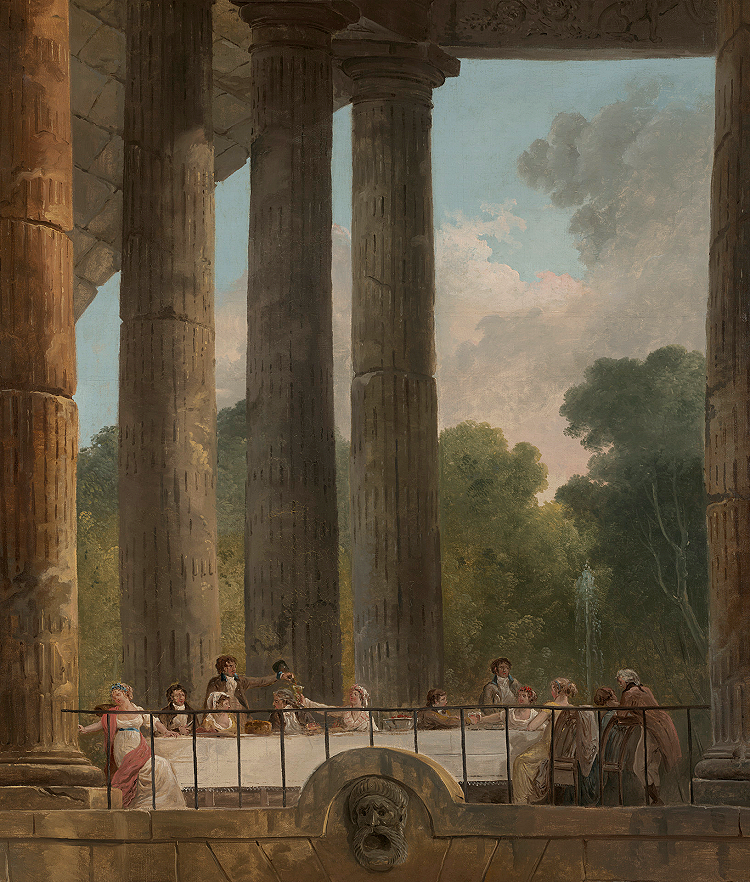
A Banquet in the Ruins of a Temple, by Hubert Robert, 1795.
Tekemessa and Eurysakes, by John Henry Fuseli, circa 1800-10.
Saturday Evening Post cover, Halloween, by Frederic Stanley, 1921.
Two sisters, by Cornelis de Vos, circa 1610-15.
Crescentia, Countess Széchenyi, by Ferdinand Georg Waldmüller, 1828.
Apollo and Marsyas, by Hans Thoma, 1888.
Combat of Love and Chastity, by Gherardo del Fora, circa 1480-1500.
From the series “Jardines interiores", by Yuris Nórido Ruiz Cabrera, contemporary.
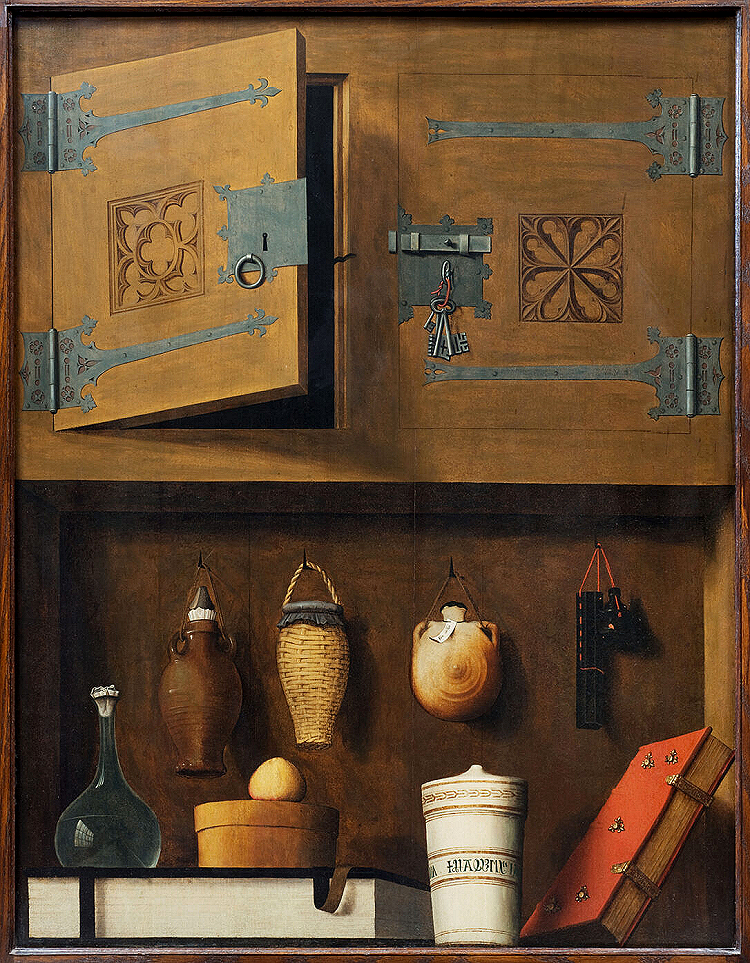
Nature morte aux bouteilles et aux livres, anonymous, circa 1530.
Ensemble by Maggy Rouff worn by Ann-Emily Lacey, by Egidio Scaioni, 1934.
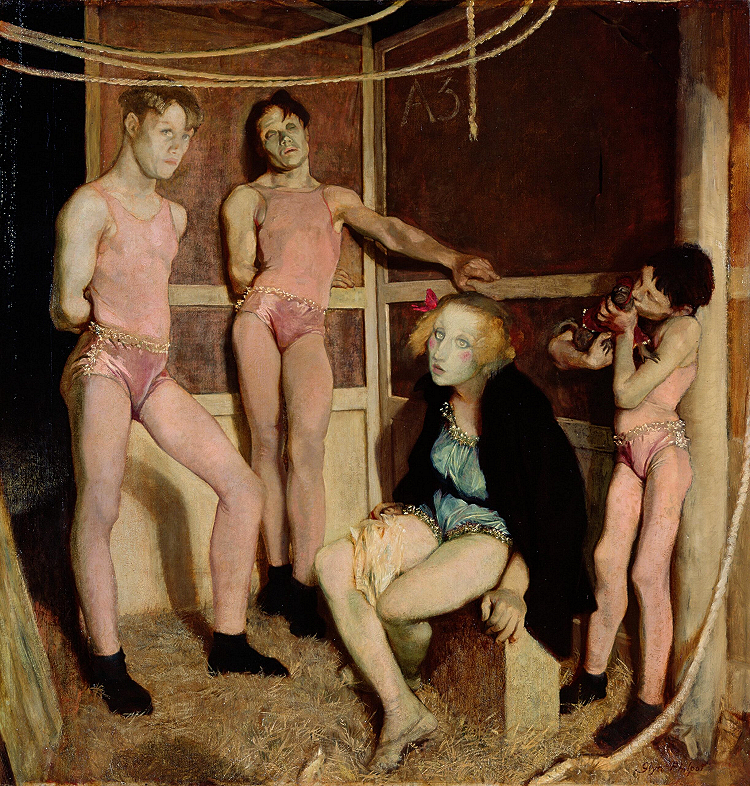
Resting Acrobats, by Glyn Philpot, 1924.
Bouquet de pensées, Léon Bonvin, 1863.
The Cotillion, by Howard Chandler Christy, circa 1901.
In Brooklyn Navy Yard, by William Merritt Chase, 1887.
  Gerberas at Monbulk, by Jesse Dayan, contemporary.
Bildnis eines Malers in einem Pariser Atelier, by Ottilie Roederstein, 1887. 
Le Parc à Versailles, by Henri Martin, circa 1910-20.
I fidanzi - promessi (the engaged couple - vows), by Giuseppe Tominz, 1832.
Pins au clair de lune, by Thorolf Holmboe, 1902.
National Academy, Amsterdam, by Maria Austria, 1962.
A young Lady at her Toilet, by Willem van Mieris, circa 1681.
Self-portrait, by Bruno Schulz, 1933.