L a - b e a u t é - s a u v e r a - l e - m o n d e ~ D o s t o ï e v s k i

L a - b e a u t é - s a u v e r a - l e - m o n d e  ~  D o s t o ï e v s k i


Showing posts with label Francesco Hayez. Show all posts

Sunday, September 15, 2024

Vingt-six dames, trois filles - female portraits

 
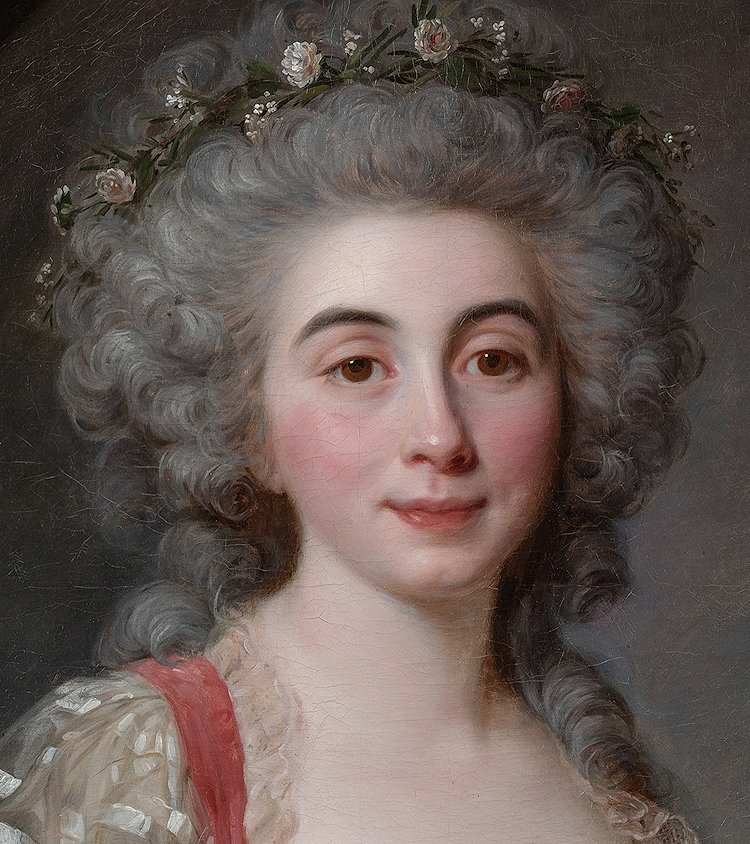
Caroline Lefebvre, vicomtesse de Fontanges, by Antoine Vestier, 1787.
Isabella of Portugal, workshop of Rogier van der Weyden, circa 1450.
Louise de Kérouaille, Duchess of Portsmouth, by Philippe Vignon, circa 1673.
Duchess Louise Charlotte of Mecklenburg-Schwerin, Hereditary Princess of Saxe-Gotha-Altenburg, unknown miniaturist, 1799.
Victoria, Princess Royal, Crown Princess Frederick William of Prussia, by Joseph Hartmann, 1858.
Portrait of a girl aged six holding a book of music, English School,1589.
Mrs. Mary Robinson, by Sir Joshua Reynolds, circa 1783-84.
Study for the above.
Princess Alexandra of Edinburgh, Princess of Hohenlohe-Langenburg, by Heinrich von Angeli, 1898.
Portrait of a Lady, traditionally identified as Louise de Lorraine, by Jean de Court (formerly attributed to François Clouet), circa 1570-79.
Matilde Juva Branca, by Francesco Hayez, 1851.
Selina, Lady Skipwith, by Joshua Reynolds, 1787.
Marie Dorothée Renouard, by Johann Friedrich August Tischbein, 1793.
Repòs, by Marisa Roësset Velasco, 1928.
Madame Hurault de Sorbée, née Elisabeth Kastner (called Lisbeth), by Alexandre-François Caminade, circa 1812.
 Princess Charlotte of Belgium, Archduchess of Austria, later Empress Carlota of Mexico, by Jean-François Portaels, 1857.
Her toilette is an interpretation of the regional costume of Brianza; her husband Maximilian was viceroy of the Kingdom of Lombardy-Venetia from 1857 to 1859.
Queen Elizabeth I, attributed to George Gower, possibly circa 1567.
 The actress Rachel (née Elisa-Félix) as Catherine the Great in Eugène Scribe's La Czarine, by Edmond-Aimé-Florentin Geffroy, 1855.
Princess Karoline Friederike Wilhelmine of Hesse-Kassel, by Friedrich Bury, 1820.
Elisabeth Alexandrine Maria Berthier, Princess of Wagram, by Franz Xaver Winterhalter, circa 1870.
Flora, a portrait of either Vittoria della Rovere from 1639, or of Isabella d'Este from circa 1650-60, by Justus Sustermans.
Tommasina Balbi Cambiaso, by Anton Raphael Mengs, 1771.
Wilhelmine Begas, the artist's wife, by Carl Joseph Begas, 1828.
A young princess (probably Dorothea of Denmark), by Jan Gossaert, circa 1530-32.
Portrait of a lady in green turban, by Aimée Brune-Pagès, 1834.
Anna Maria Vasa, daughter of King Sigismund III of Poland, by Martin Kober, 1596. Three years old in the painting, she died at seven.
Marie-Anne-Éléonore-Félicité le Planquois, by Alexander Roslin, circa 1769.
Creole in a Red Turban, by Jacques Guillaume Lucien Amans, circa 1840.
Virginie Lupin, the wife of prefect Achille François Bégé, by Louis Hersent, circa 1825-30.
Maria Leopoldine von Habsburg-Tirol, Holy Roman Empress, by Justus Sustermans, circa 1647-50.


Sunday, July 31, 2022

The wages of vengeance - Trittico della Vendetta, a triptych by Francesco Hayez, circa 1847-1853

 
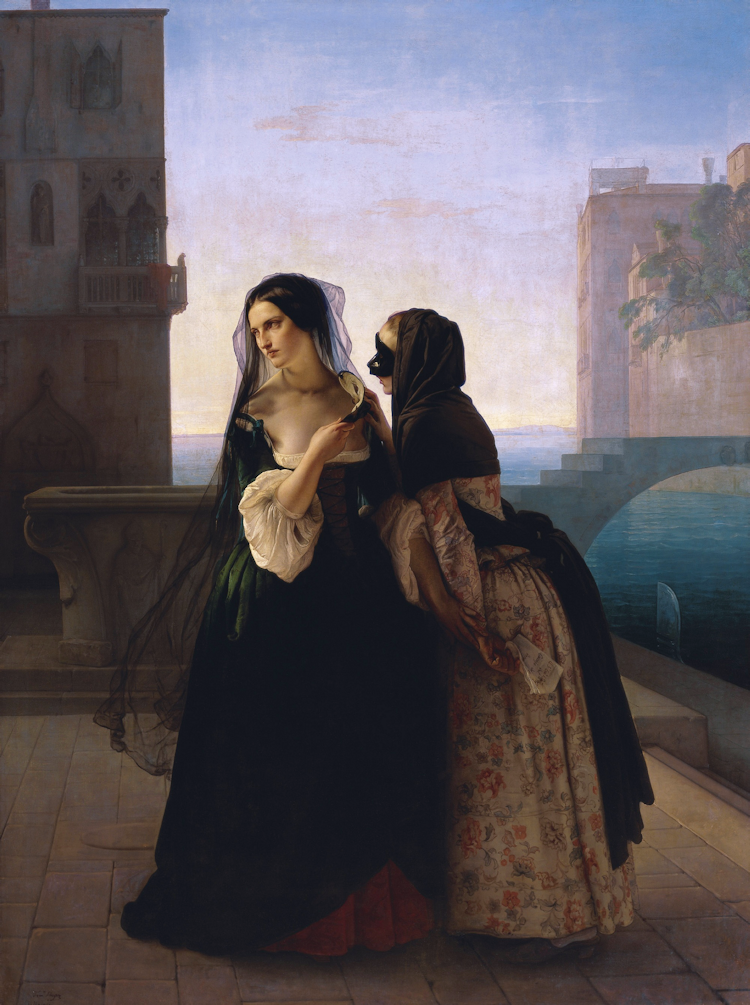
Consiglio alla vendetta.

The Trittico della Vendetta (the Revenge Triptych) is a series of mid-nineteenth-century paintings by Francesco Hayez, the three vignettes centering on a woman named Maria and her revenge upon the lover who has betrayed her.


Consiglio alla vendetta (Vengeance is Sworn) was painted in 1851. It was the second work to be produced, but shows the first episode in the story. Now in the Liechtenstein Museum in Vienna, it shows Maria's friend Rachel advising her to use political denunciation to wreak vengeance upon her lover.


*

Accusa segreta. 

Accusa segreta (Secret Accusation) was painted in 1847-48, and was therefore the first of the three to be completed, though it illustrates the second episode. It is now resides in the collection of the Musei Civici di Pavia. It shows Maria posting the letter, anonymously denouncing her lover.


*

La vendetta di una rivale or Le veneziane (copy).

La vendetta di una rivale or Le veneziane (The Revenge of a Rival or The Venetian Woman) dates from circa 1853. It shows the third episode, Maria repenting of her actions and trying to stop her denunciation from being delivered. Sadly, the present location of the original is unknown, though a copy now in the Villa Carlotta was probably made after the its success at the Brera exhibition of 1853. The composition of the third episode was replicated in a bronze bas-relief for the base of Francesco Barzaghi's 1890 monument to Hayez in the Piazzetta di Brera in Milan.