|
| I've been unable to find exact dates for any of these paintings and, as most of their titles... |
 |
| ... are quite generic - "Elegant Ladies in a Carriage", "Country Drive", etc. - I'll let the paintings speak for themselves. |
Doris Clare Zinkeisen (31 July 1898, Rosneath, Argyll – 3 January 1991, Badingham, Suffolk), Scottish stage and costume designer, painter, commercial artist, and writer; she was best known for her designs for the theatre. She was the daughter of a timber merchant and amateur artist; her younger sister Anna was also go on to become a well-known artist. When she was eleven, her family moved to Harrow and both sisters attended the Harrow School of Art for four years before winning a scholarship to the Royal Academy Schools in 1917. The sisters shared a studio in London during the Twenties and Thirties.


Zinkeisen became a prominent society painter, her portraits, equestrian paintings, and historicist scenes set London and Paris parks appealing to a wealthy and fashionable clientele. She exhibited at the Royal Academy in 1929, and won medals at the 1929, 1930, and 1934 Paris Salons. She was also very successful as an illustrator and commercial artist, among other things producing advertising posters for several British railway companies and the London Underground. In 1935, she and her sister were commissioned to create murals for the Verandah Grill, a restaurant and night-club on the ocean liner the RMS
Queen Mary; she also participated in the interior decoration of the room. Both sisters also contributed murals to the RMS
Queen Elizabeth five years later.
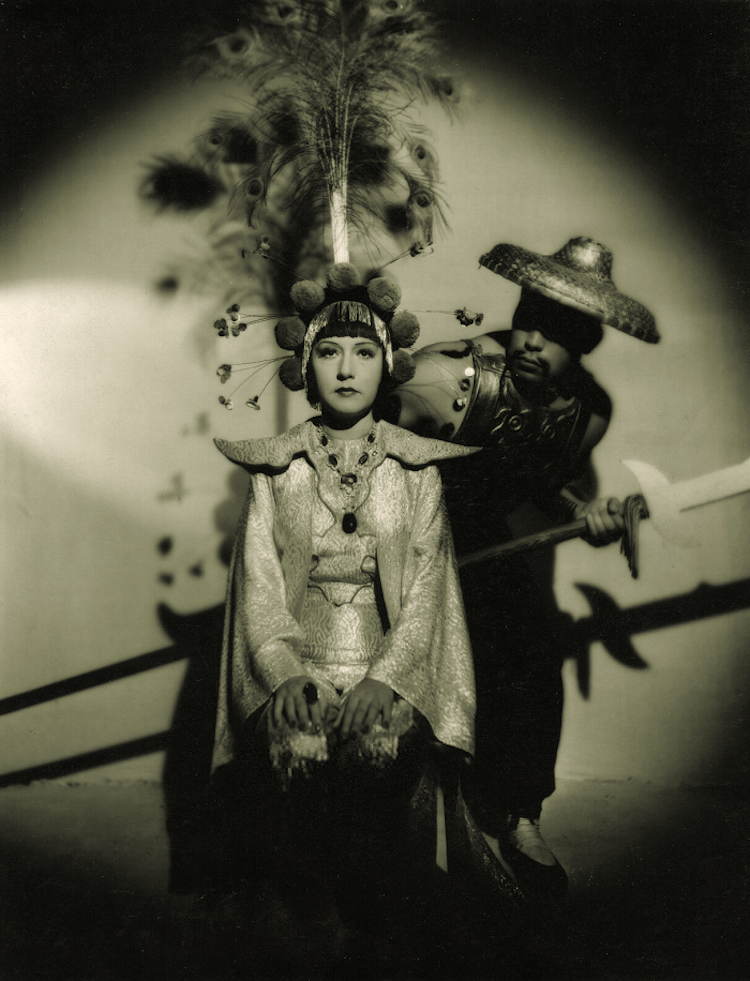
But she had even more success as a scenery and costume designer, beginning right upon leaving the Royal Academy. She became chief stage and costume designer for Charles B. Cochran's popular London revues, and produced work for shows by Noël Coward, Cole Porter, Moss Hart and Irving Berlin, among others. She worked on a number of Herbert Wilcox films that starred Anna Neagle, and designed the costumes for the 1936 screen version of Show Boat, her only American film. In 1955, she created Laurence Olivier's make-up for the film version of Richard III.


During World War II, she worked as a nurse in London helping wartime Blitz casualties having first trained as a nurse during World War I. She worked in the casualty department of St Mary's Hospital in the mornings and painted in the afternoons. Following the liberation of Europe in 1945, she was commissioned as a war artist. Her work included three days at the Bergen-Belsen concentration camp in April 1945, immediately after its liberation; according to her son, the experience left her with nightmares for the rest of her life.


Away from her artistic pursuits, Zinkeisen was a fine horsewoman - not terribly surprising given the frequency, as here, of horses in her work - and even won the Moscow Cup at the International Horse Show in 1934. In 1922, she had met James Whale, just starting his career as a director. The two were considered a couple for a few years - reportedly engaged in 1924 before breaking it off the following year - despite Whale's living as an openly gay man. In 1927 she married a naval officer and had three children, a son and twin daughters, the children's book illustrators Janet and Anne Grahame Johnstone. Her husband died in 1946, but their unmarried daughters lived with her until her death at the age of ninety-two.