L a - b e a u t é - s a u v e r a - l e - m o n d e ~ D o s t o ï e v s k i

L a - b e a u t é - s a u v e r a - l e - m o n d e  ~  D o s t o ï e v s k i


Showing posts with label Sandro Botticelli. Show all posts

Friday, September 23, 2022

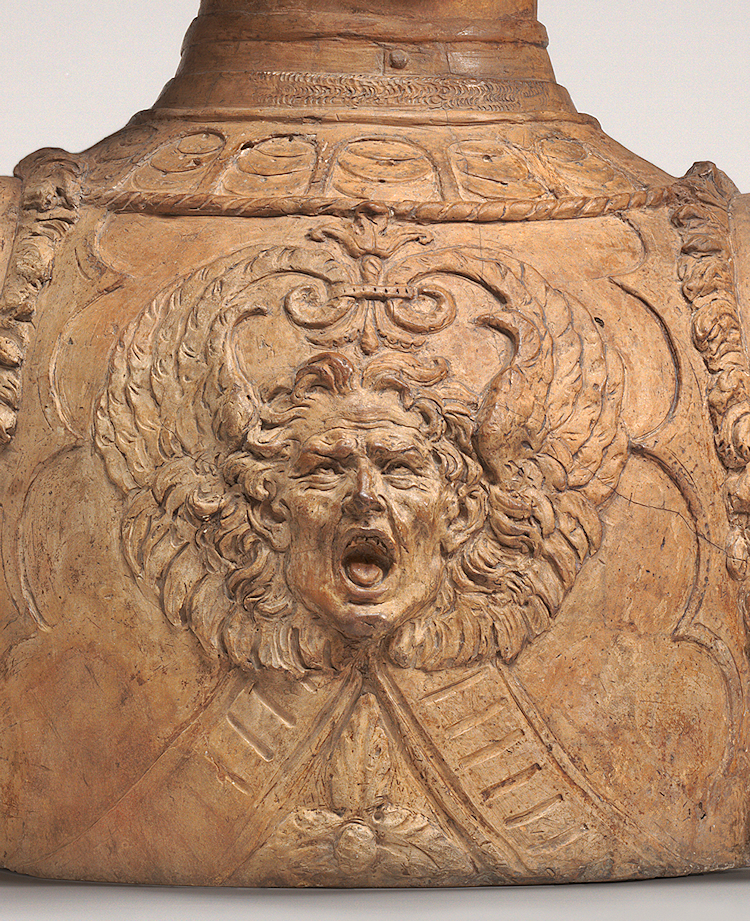
But, then, wasn't all mankind created from clay? - bust of Giuliano de' Medici by Verrocchio, circa 1475-1478


Since 1937 in the collection of the National Gallery of Art, which describes the history of the portrait thusly:

Verrocchio, a favorite artist of the Medici, may have created this lively and commanding portrait on the occasion of a joust that took place in 1475 in Florence for Giuliano de' Medici's coming of age. The bust was originally painted and possibly adorned with a metal helmet and other decoration, projecting an exuberance especially evident in the winged face modeled on Giuliano's fanciful armor. The beloved younger brother of the de facto ruler of Florence, Lorenzo the Magnificent, Giuliano was destined for an important future, a hope cut off by his dramatic murder during mass in Florence's cathedral, on April 26, 1478, in an unsuccessful attempt to overthrow Medici rule.


Also in the National Gallery is Botticelli's portrait of Giuliano de' Medici; circa 1478-80, it was likely created posthumously. Supporting that theory is the open window and mourning dove, artistic devices which were common symbols of death, alluding to the flight of the soul and the deceased's passage to the afterlife.


Sunday, August 28, 2022

The still garden of veneration - the Bardi Madonna, by Sandro Botticelli, circa 1485


*

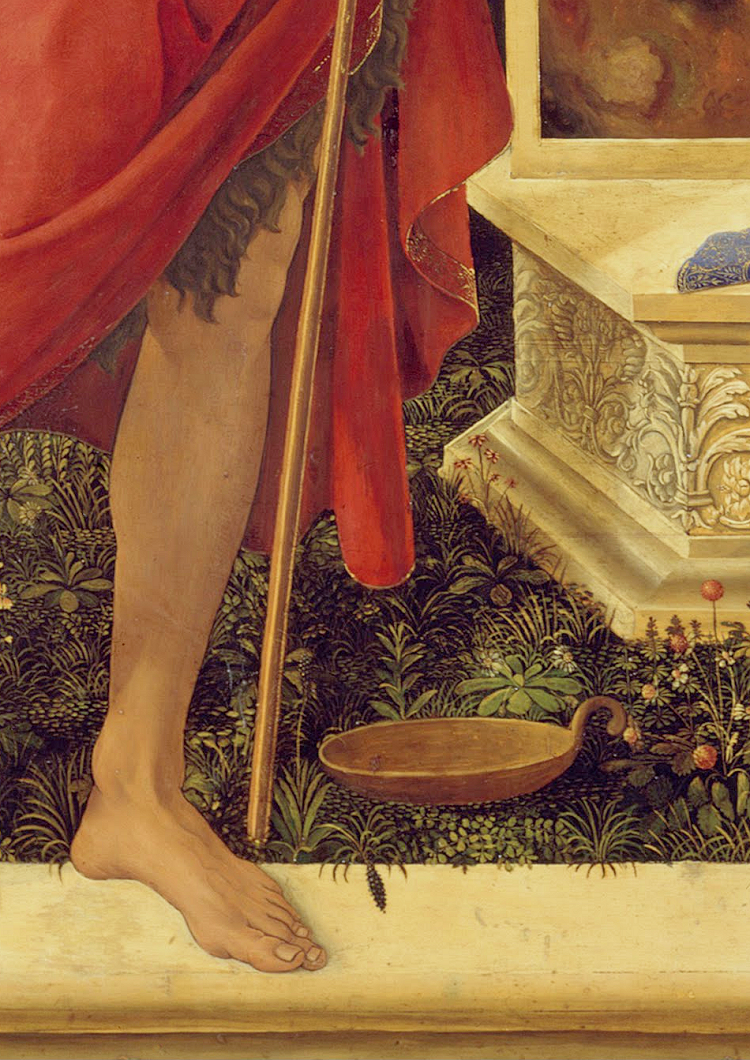
The Virgin Mary is shown enthroned preparing to breastfeed the infant Jesus. She is flanked by a pair of Saint Johns; John the Baptist on the left, and John the Evangelist on the right. The figures are presented in a densely detailed setting; plants and flowers so dominate that only small patches of sky remain visible, all of it suggesting a hortus conclusus or closed garden, a very traditional visual reference to the Virgin Mary. The composition is loaded with iconographic symbols and text, some obvious, others more obscure. But the walled garden, the white lilies in vases, the red flowers, the palms, clearly evoke the purity of Mary, the future Passion of Christ, and illustrate the Virgin's place in Christian mysticism.


The tempera on wood panel measures 185 x 180 cm (approximately 73 x 71 inches). The altarpiece was commissioned by the rich Florentine banker Agnolo Bardi, who had returned home after more than twenty years as a banker and wool merchant in London, where he was known as "John de Barde." Installed in his family chapel at the Santo Spirito Basilica in Florence, it is now in the Gemäldegalerie, Berlin. The frame is by Giuliano da Sangallo who, at the time, was just becoming Lorenzo de' Medici's favorite architect. It's thought that the altarpiece may have included other panels, now missing.