L a - b e a u t é - s a u v e r a - l e - m o n d e ~ D o s t o ï e v s k i

L a - b e a u t é - s a u v e r a - l e - m o n d e  ~  D o s t o ï e v s k i


Showing posts with label Charles Buchel. Show all posts

Sunday, April 4, 2021

What they call the role of a lifetime - Doris Keane in "Romance"

 
A promotional post card featuring a portrait by Charles Buchel.
Five character portraits by Herman Mishkin, 1913.
Autochrome by Arnold Genthe, 1913.

Doris Keane (12 December 1881, St. Joseph, Michigan – 25 November 1945, New York City), American theatrical actress. Educated largely in Europe, she first began appearing in supporting roles in 1903, and within five years had risen to leading status. But it was in 1913 that she was given the role with which she would forever after be associated, the capricious and tender opera singer Margherita Cavallini in Edward Sheldon's Romance. A great success on Broadway, the play opened in London two years later and ran for an astonishing 1,049 performances. She was lauded by the London critics, and the public seemed never to tire of the play or the actress; she was even portrayed a number of times as Cavallini in figurines by Royal Doulton. Keane was successful in other roles, but returned regularly in revivals of the play throughout the next decade: 1921, 1926, and 1927. 
 
Apparently, a monkey was among the cast members.
Front and back of another promotional post card. I haven't been able to discover the portrait's author.

Sheldon, the playwright, fell in love with his star, though his feelings, which are said to have lasted the rest of his life, were unrequited. Keane had one child, a daughter Ronda, born in Cannes in 1915; financier Howard Gould acknowledged paternity but the couple never married. Three years later she married actor Basil Sydney, thirteen years her junior. He starred with her in a silent film of Romance - her only film appearance - in 1920, as well as the revival of the play the following year. They divorced in 1925. 

Keane was painted by Philip de László in 1916. The present location of the portrait is unknown and is, so far, not included in the artist's catalogue raisonné.
Three Royal Doulton figurines of Keane as Cavallini.
With her co-star and husband, Basil Sydney, on the cover of Picture Show magazine, promoting the film version of Romance, 1921.

I haven't been able to find any information about the final two decades of her life. But she died at the age of sixty-three while being treated for cancer. She was cremated and buried on Martha's Vineyard. Her daughter's ashes were joined with hers when Ronda died sixty-three years later.

Another promotional postcard featuring a detail of the Buchel portrait.

*

In 1930, in only her second "Talkie", Garbo starred as the opera singer in the second film version of Romance. Her performance was appreciated well enough to warrant an Academy Award nomination, but it's one of her least remembered films now. It's generally felt that the character of the dramatic prima donna didn't really suit the sober Swede.

"Gowns by Adrian", not surprisingly. But rather than Clarence Sinclair Bull, the portraits were taken by George Hurrell, the only time they worked together.


Friday, August 7, 2020

Shakespearean paint - character portraits of Sir Herbert Beerbohm Tree by Charles Buchel


As Macbeth, 1914.
As Othello, 1914.
As Mark Antony in Julius Caesar, 1914.
As Shylock in The Merchant of Venice, 1914.
As Benedick in Much Ado About Nothing, 1905.
As Hamlet, 1899.
As Cardinal Wolsey in Henry VIII, 1911-12.
As King John, 1900.
As Caliban in The Tempest, 1904.
The same as above.

Sir Herbert Beerbohm Tree (17 December 1852, London - 2 July 1917, London), English actor and theater manager. The son of a prosperous merchant, he began performing in the 1870s and by 1887, at only thirty-four, he had taken on the management of the Haymarket Theatre, winning praise for his adventurous programming and lavish productions, while starring in many of its productions. After his success with the Haymarket, he helped fund the rebuilding of His Majesty's Theatre in lavish Louis XV style. It opened in 1897 during Queen Victoria's Diamond Jubilee year, and Tree would own, manage, and live in the theater until his death two decades later. As he had at the Haymarket, he scheduled a mix of Shakespeare and classic plays with new works and adaptations of popular novels, giving them sumptuous productions in the large house, and often playing leading roles. Tree was regarded as a versatile and skilled actor, particularly in character roles though, by his later years, his technique was seen as mannered and old-fashioned. His productions were exceptionally profitable; they were famous, most of all, for their elaborate and often spectacular scenery and effects. Unlike some other famous actor-managers, Tree engaged the best actors available to join his company and hired the best designers and composers for the plays with incidental music. He founded the Royal Academy of Dramatic Art in 1904 and was knighted, for his contributions to the theater, in 1909. He wrote several books on the theater, and appeared in three early films. He spent most of 1915 and 1916 in the United States. He returned to England the following year, but died suddenly after surgery for a broken leg. He was sixty-four.

His family included his siblings, explorer Julius Beerbohm, author Constance Beerbohm and half-brother caricaturist Max Beerbohm. He married actress Helen Maud Holt in 1882; she often played opposite him and assisted him with management of the theaters, while her social adeptness assisted the couple's entry into élite artistic and intellectual circles. Their daughters were actresses Viola and Felicity Tree, and poet Iris Tree; their father also fathered several illegitimate children, including film director Carol Reed and Peter Reed, father of the British actor Oliver Reed. Tree was also the grandfather of Hollywood screenwriter and producer Ivan Moffat.

*

And in a non-Shakespearean role, as Gringoire in The Ballad Monger, 1912.

Charles Buchel (Karl August Büchel) (1872, Mainz - 1950), German-born British artist. He immigrated to England as a child and studied art at the Royal Academy Schools. He was hired by the actor-manager, Sir Herbert Beerbohm Tree in 1898, and worked with him for sixteen years. He painted several portraits of Tree, and also designed theatrical programmes and advertising posters, programmes for the theater. He also drew many illustrations for theater magazines of his day. He is best remembered today for his many portraits of the stage stars of his era.

"Wandering Minstrel." I'm not sure if that's a character name, the title of the play, or both.


Sunday, July 12, 2020

Randomly XVIII


Oslo, 1930.
Portrait of a Hassidic Talmud Student, by Isidor Kaufmann, circa 1890-1910.
Ziegfeld star Dorothy Flood, photograph by Alfred Cheney Johnston, 1931.
The Drowning, by N. C. Wyeth, 1936.
The Alzanas, high-wire act, 1949.
Christian, Prince-Elect of Denmark, eldest son of King Christian IV, by Pieter Isaacsz, 1615.
 Henriette Adelaide of Savoy, Electress of Bavaria, by Jean Delamonce, circa 1674.
Still Life, by Fernand Renard, ND.
Norwegian writer and poet Jarl André Bjerke while a student, circa 1940.
Jane XXX, by Sir Gerald Kelly, 1930.
Infanta Maríana Víctoría of Spain, later Queen of Portugal and the Algarves , by Alexis Simon Belle, 1725.
Germanischer Krieger mit Helm, by Osmar Schindler, 1902.
Lady with a Parrot, by Károly Sterio, 1860.
Le Baiser, by Gustave Leonard De Jonghe, circa 1870s.
Portrait of a Man, French School, circa 1790.
Buenos Aires, 1943.
Anne Wortley, later Lady Morton, unknown artist, circa 1620s.
 Prince Youcca Troubetzkoy costumed for the film "Madam Satan", 1930.
La sultana, by Pietro Luchini, 1860.
Doll house, 1930. Courtesy Matthew Dennison.
The Parsonage Garden at Nuenen in Spring, by Vincent van Gogh, 1884.
Fishing from a Punt, by Peder Mønsted, 1910.
Maria Luisa di Borbone-Parma, later Queen of Spain, by Laurent Pécheux, circa 1765-70. 
James Hay, 1st Earl of Carlisle, studio or circle of William Larkin, circa 1618-19.
From the "A Spring Hat and the City of Bath" series, by Norman Parkinson, British Vogue, 1948.
Count Kirill Razumovsky, by Pompeo Batoni (studio of?), 1766.
 Lizzie B. Dewey (Mrs. Francis Henshaw Dewey II), by John Singer Sargent, 1890.
"Lud in evening dress by Jean Patou, jewels by Mauboussin", by Horst P. Horst, 1938.
Arion Riding a Dolphin, by Germán Hernández Amores, mid-nineteenth century.
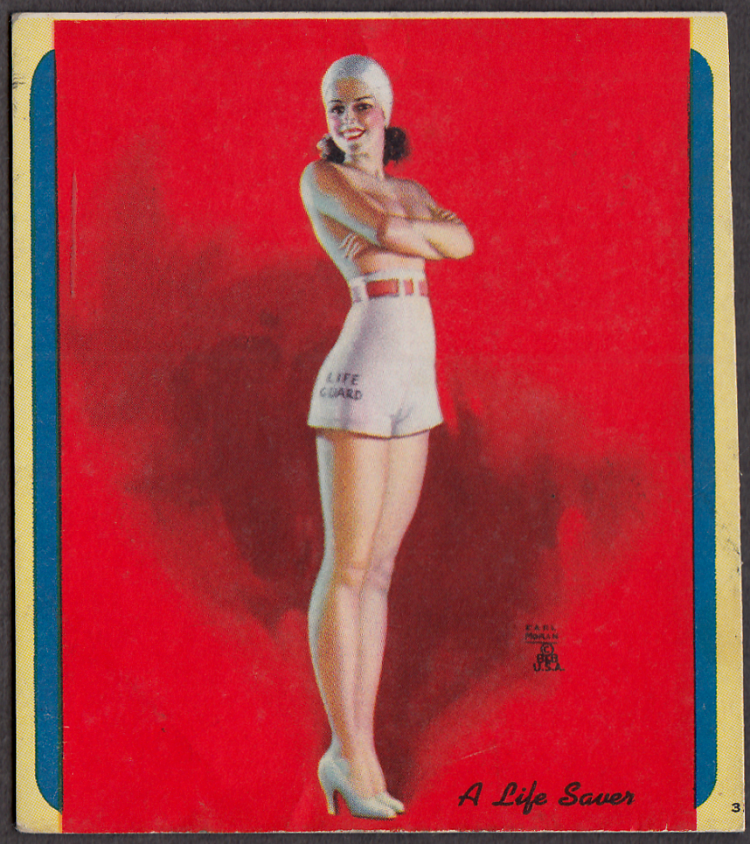
A Life Saver, pin-up miniature blotter, by Earl Moran, circa 1940s.
Portrait of a Lady, by Miguel de Herrera, 1782.
Hercules and Lichas, by Pavel Sorokin, 1849.
 Repetition, by Raphael Delorme, 1930.
Ruth St. Denis and Ted Shawn, by Nickolas Muray, 1920.
Pygmalion and Galatea, by Laurent Pécheux, 1784.
Snow at the Hakone Gongen Shrine, by Kawase Hasui, circa first half of the twentieth century. 
Heels, by Charles Guyette, circa 1940.
 Oarsman, by J. C. Leyendecker, 1916.
Portrait of a Woman Holding Gloves, by Paolo Veronese, circa 1560.
Les Halles, Paris, by Alfred Eisenstaedt, 1930.
Nude figure, by Luis de Madrazo y Kuntz, circa mid-nineteenth century.
Academic study, Italian School, circa first half of the nineteenth century.
Unknown gentleman, by Jan van Ravesteyn, 1634.
Elisabeth Ludovika of Bavaria, Queen of Prussia, possibly by or after Joseph Stieler, circa mid-nineteenth century.
Courtesy Stephen Rutledge.
 Saint Sebastian Tended by Saint Irene, by Francesco Cairo, circa 1635.
A Young Archer, French School, circa 1820.
 Saint Sebastian, by Ferdinand Murmann, 1630.
 "To my dear little sisters Firmine and Madeleine, your brother Joseph, 10 March 1898." Courtesy Ralf De Jonge.
The Death of Alcibiades, by Philippe Chéry, 1791.
 Parisian mistletoe merchants, 1928. Courtesy David Ciminello.
The Love of Angels at the Time of the Flood, by Édouard Cibot, 1834.
Cupid and Psyche, by Annie Swynnerton, 1891.
Courtesy Ralf De Jonge.
 Ludwika z Zyberków Borchówa, wife of Jan, Crown Chancellor, unknown Polish painter, circa late 1770s.
Portrait of a young man, by Jan van Ravesteyn, circa 1620s.
David with the Head of Goliath, by Orazio Riminaldi, circa first quarter of the seventeenth century.
Study, French School, late eighteenth century.
Portrait of a Young Man, by Joseph Abel, circa 1814.
Swedish water polo player Hans Hellbrand, circa 1950.
Perseus, attributed to Pietro Benvenuti, circa late eighteenth century.
 Municipal Life Guard, Los Angeles, 1926.
One Lemon Quartered, by Eliot Hodgkin, 1972.
Miriam Clements as the Lady Olivia in Twelfth Night, by Charles Buchel, circa 1900-10.
 Self-portrait, by Marie Høeg, circa 1900.
Louis Ghémar l'ainé, by Carolus-Duran, 1871.
 Garden in Baden Germany, autochrome by Wilhelm Tobien, 1928.