L a - b e a u t é - s a u v e r a - l e - m o n d e ~ D o s t o ï e v s k i

L a - b e a u t é - s a u v e r a - l e - m o n d e  ~  D o s t o ï e v s k i


Showing posts with label Edward VII. Show all posts

Friday, November 1, 2024

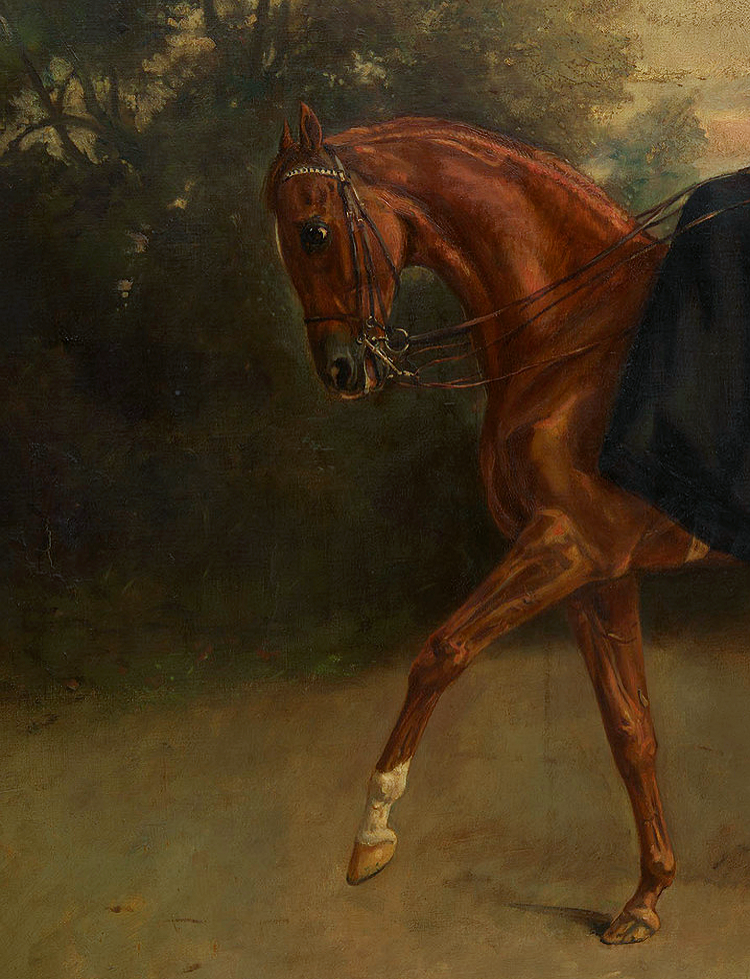
Skittles à cheval - an equestrian portrait of Catherine Walters, by Jean Édouard Lacretelle, circa 1867-68


Catherine Walters (13 June 1839, Liverpool – 5 August 1920, London), also known as "Skittles", one of the last of the great courtesans of Victorian England, her benefactors believed to have included intellectuals, leaders of political parties, aristocrats, and a member of the British Royal Family. Her nickname is thought to have originated from her having worked at a bowling alley in Chesterfield Street near Park Lane, "skittles" being the name of the game which evolved into bowling. At other times, she was known as "Mrs. Behrens" and "Mrs. Baillie", even though she is not thought to have ever married. She was not known as a great beauty, but what was undisputed was her perfect figure and her great skill as a horsewoman. She, notably, became the mistress of Spencer Cavendish, Marquess of Hartington - later eighth Duke of Devonshire - who set her up in a Mayfair house with an annuity. Her position allowed her to travel in social circles which included the Prince of Wales, later King Edward VII. In the 1860s, the sight of Walters riding in Rotten Row in Hyde Park actually drew sightseers, and she became known as a fashion trendsetter, with aristocratic ladies copying the cut of her perfectly fitted riding habits. At the height of her celebrity, she left London for New York and then Paris. She remained on the continent for ten years, creating a salon in Paris, only returning to England for the hunting season, further establishing her reputation as a superb horsewoman. She returned to London in 1872 and established a salon there as she had in Paris. During her life as a courtesan, her discretion and loyalty made her a sought-after companion, giving longevity to her career, and helping her to retire a wealthy woman around 1890. At her death from a cerebral hemorrhage at the age of eighty-one, she left a very considerable estate.

Two characteristic photographs of Walters, both posed against painted backdrops.

The portrait was previously thought to portray Elisabeth, Empress of Austria; though the empress was an enthusiastic equestrienne, the figure in the painting in no way resembles her. It was presumably acquired by King Edward VII while Prince of Wales, and was first recorded at Buckingham Palace in 1909.


*

Jean Édouard Lacretelle (4 June 1817, Forbach (Moselle) - 3 May 1900, Paris), French artist, working in London by 1851. He exhibited at the Paris Salon from 1841 to 1881 and at the Royal Academy from 1851 to 1891. Principally known as a portrait painter, he also produced genre scenes and equestrian works.


Sunday, May 5, 2024

Radiant consort - a selection of Queen Alexandra's spangled gowns


Alexandra of Denmark waited thirty-eight years as Princess of Wales before reaching the pinnacle of her royal and imperial career as queen and empress consort to Edward VII. The victim of her husband's fairly flagrant infidelity and her own ever worsening hearing loss, she had sought solace with her children and extended family, as well as with frequent travel, social engagements, and through her popularity with the public. Known for her beauty and elegant figure, she was also a much-copied influence on fashion in the second half of the nineteenth century. There was certainly nothing timid, though, about her evening and gala toilettes. Her beautifully detailed gowns - usually the work of Parisian fashion houses - were typically burdened by copious jewels, both real and, when she considered the array insufficient, imitation; it was said that she was able, as no other woman, to carry off such excessive display, somehow never appearing overdone or vulgar. She was queen for a very brief nine years, Edward VII dying in May of 1910. Queen Alexandra's gowns shown here are from her time as consort, and show her preference for rich ornamentation, particularly, at that time, intricate beading and a lavish display of sequins and paillettes.

Gown by Henriette Favre, circa 1906.
Gown by Henriette Favre (?), 1902.
Gown by Henriette Favre, 1902.
1907.
Circa 1908.
Gown by Maison Morin-Blossier, circa 1903.
Gown by Barolet, circa 1908.
Gown by Maison Doeuillet, 1910.
*
From an exhibition held at the Metropolitan Museum of Art, 2014-15. (Two images.)

And yet more spangles....

Both photographs were taken at the wedding of Princess Margaret of Connaught to Prince Gustaf Adolf of Sweden, 15 June 1905.

Queen Alexandra with her daughters Louise, Princess Royal and Duchess of Fife, and Princess Victoria.
Queen Alexandra with Victoria, Crown Princess of Sweden and Norway - two years later Queen of Sweden - the mother of the groom.


Sunday, April 24, 2022

To study a gown... and all the rest - The Coronation of King Edward VII, by Edwin Austin Abbey, circa 1902-06


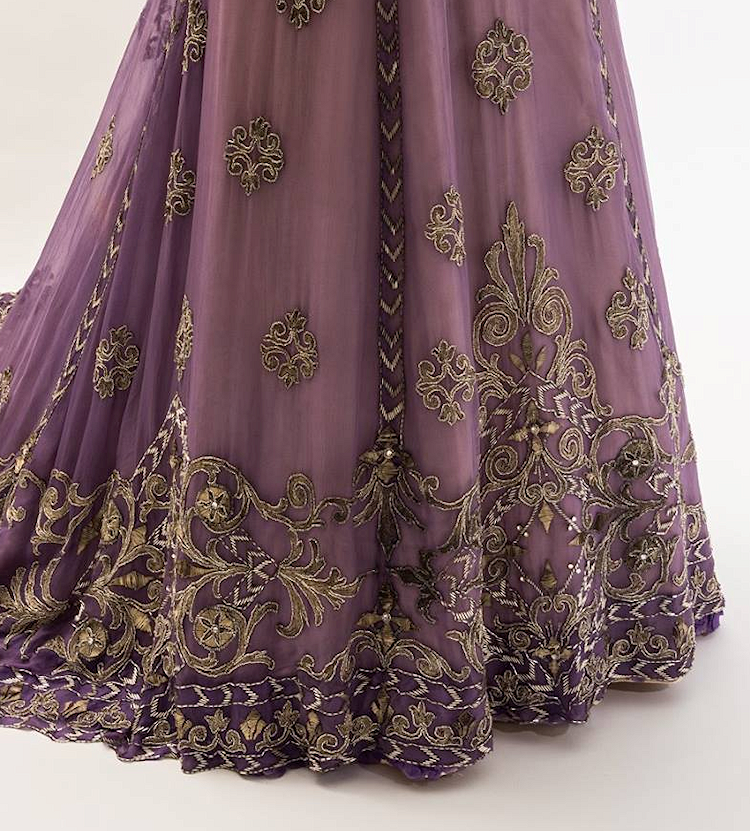
Queen Alexandra's coronation gown.

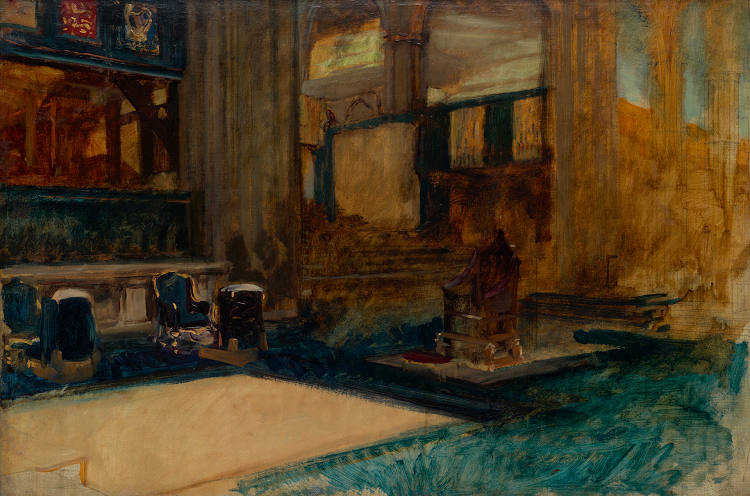
Numerous preparatory studies - both pastel drawings and oil paintings - for the vast tableau are in the collection of the Yale University Art Gallery.

The Coronation Chair, known historically as St Edward's Chair or King Edward's Chair.
Study for the overall composition.

*
 
The finished painting, The Coronation of King Edward VII, which measures all of fifteen by nine feet.

The painting itself remains in the British Royal Collection; its website gives this description (slightly edited):

The moment depicted is when the Archbishop of Canterbury, with arms lifted, is about to place the Imperial Crown on the head of Edward VII, who is seated, clothed in robes of State, in the Coronation chair. Princes and peers raise their coronets and lead the shout ‘God Save the King’. Beside the King stands the Bishop of Bath and Wells, behind whom are the Prince of Wales, the Duke of Connaught and the aged Duke of Cambridge. Within months of his accession King Edward VII had approached John Singer Sargent to ask him to paint the official Coronation portrait. However, Sargent felt unfit for the task, and declined. On 12 March 1901, W. Lockett Agnew, of Thomas Agnew & Sons, proposed a scheme for the King’s approval to paint a large painting of the Coronation. Agnew asked for the King’s authorization to call the painting ‘the only official picture of the Coronation’. It was proposed to exhibit the painting for a period of five years both in the United Kingdom and perhaps also in the USA and Canada and that sales of an engraving to be made of the painting would accrue to Agnew's. Within five years the painting would be presented as a gift to Edward VII. The painter who had been selected by Agnew's was Edwin Austin Abbey who had already ‘expressed his willingness to carry out such a picture’. Sir Arthur Ellis endorsed their choice: ‘As to E Abbey’s artistic merits, probably they are wise in choosing him – He has taken Frith’s place for such pictures & is for these subjects the best man’. The original date of the Coronation was set for 26 June 1902. During preparations and rehearsals in Westminster Abbey the artist had been able to prepare sketches and fill in positions of the main participants of the ceremony. Later he reported: ‘it was fortunate I had been able to sketch at the rehearsals or I should have been in a great muddle’. However, due to the King’s ill-health the coronation had to be postponed and was re-scheduled for 9 August 1902. The artist’s viewpoint was a specially built box in the tomb of Edmund Lancaster in the north transept. Unfortunately, it was a dull day and Westminster Abbey appeared more than usually gloomy and dark. But despite this Abbey was profoundly impressed with what he saw: ‘It was a sight indeed. They had white satin dresses and long trains of crimson velvet and ermine capes – trains and their coronets in hands. They came by twos or threes and dozens, and were marvelous to behold. I never saw so many jewels in my life.’ The Danish artist, Laurits Tuxen, entrusted to paint a more private painting of the Coronation, found the occasion similarly impressive and daunting. However, it appears that in February 1906 Abbey was still working on the project and he later declined to produce the Coronation painting of King George V. That task was undertaken by John Henry Frederick Bacon and Tuxen.


Provenance: Commissioned by Thomas Agnew & Sons Ltd from the artist in 1901; presented to King Edward VII; recorded in Buckingham Palace, on the Visitors Landing in 1909.

The engraving made of the painting and sold by Agnew's.
In Abbey's study, Queen Alexandra's coronation gown looks very different from the way the garment appeared on the day of that solemn occasion....
... as the Queen famously covered herself - literally head to toe - with jewels that day.
The only remaining identifiable jewel in the gorgeous sketch is the Dagmar Necklace, a wedding present given to the queen by her parents in 1863.

*

Edwin Austin Abbey RA (1 April 1852, Philadelphia - 1 August 1911, London), American muralist, illustrator, and painter. He is best known for his drawings and paintings of Shakespearean and Victorian subjects, as well as for his painting of Edward VII's coronation. His most famous set of murals, "The Quest and Achievement of the Holy Grail", adorns the Boston Public Library. He studied art at the Pennsylvania Academy of the Fine Arts and began as an illustrator, producing numerous illustrations and sketches for such magazines as Harper's Weekly and Scribner's Magazine; his illustrations began appearing in Harper's before Abbey was even twenty years old. He moved to New York City in 1871, then to England in 1878, at the request of his employers, to gather material for illustrations of the poems of Robert Herrick, published in 1882. He settled there permanently the following year. He first  exhibited an oil painting at the Royal Academy in 1890. The same year he married Gertrude Mead, the daughter of a wealthy New York merchant, who did much to encourage his career. He received a knighthood sometime after completing the coronation picture, and was awarded other important honors, including the Légion d'honneur. He was working on an ambitious program of murals for the newly completed Pennsylvania State Capitol in Harrisburg, when his health began to fail and he was diagnosed with cancer. He died at the age of fifty-nine and is buried in the churchyard of Old St Andrew's Church in Kingsbury, London.