L a - b e a u t é - s a u v e r a - l e - m o n d e ~ D o s t o ï e v s k i

L a - b e a u t é - s a u v e r a - l e - m o n d e  ~  D o s t o ï e v s k i


Sunday, June 9, 2024

Matrimonial disaster - the wedding of George, Prince of Wales and Caroline of Brunswick-Wolfenbüttel, 1795

 
The Marriage of George, Prince of Wales, by John Graham, 1795.

I rather love this painting. Not only for the quaint depiction of the figures and the rich but beautifully restrained coloration. But also because of the odd posture of the bridal couple. The way they - maintaining as much distance as possible - are forced to lean in, just enough to get the ring on. Certainly the artist wasn't trying to convey any sort of hidden message or "insider" commentary with the pose, but I find that detail of the tableau particularly - perversely - delightful, knowing what I know about their famously intense aversion for each other.


In 1794, the Prince of Wales - the future George IV - and his first cousin Caroline  of Brunswick-Wolfenbüttel (17 May 1768 - 7 August 1821) were engaged. They had never met. Heavily in debt as always, the prince had agreed to marry her because Parliament would increase his allowance if he contracted a marriage with an eligible princess. (In fact, he was already married. He had secretly wed Maria Fitzherbert in 1785, but his marriage to Fitzherbert violated the Royal Marriages Act and so was not legally valid.) The diplomat Lord Malmesbury was dispatched to Brunswick to escort Caroline to Britain. Malmesbury wrote in his diary about his concerns as to Caroline's suitability as the Prince Wales' bride for the prince, noting that she was too outspoken and often neglected to wash, or change her dirty clothes. Indeed, on meeting his future wife for the first time, the prince asked Malmesbury to bring him brandy. Similarly disappointed, Caroline complained to Lord Malmesbury that the prince was, "very fat and he's nothing like as handsome as his portrait."

In this, as in the following painting, the groom's father, King George III, is seated on the left, presumably surrounded by his other sons...

The couple was married on 8 April 1795 at the Chapel Royal, St. James's Palace, in London. During the ceremony, the prince was drunk. He found his bride unattractive and unhygienic, and expressed his suspicions that she was not a virgin when they married. In a subsequent letter to a friend, the prince claimed that the couple only had sexual intercourse three times in the course of their marriage - twice the first night of the marriage, and once the second night - writing, "it required no small [effort] to conquer my aversion and overcome the disgust of her person." While Caroline claimed her new husband was so drunk that he "passed the greatest part of his bridal night under the grate, where he fell, and where I left him".

... While the prince's mother, Queen Charlotte, in on the right, her daughters standing behind.

Nine months after the wedding, Caroline gave birth to their only child, Princess Charlotte (7 January 1796 - 6 November 1817), and the couple separated soon after. But all the DRAMA that followed is too good to whittle down for a mere blog post. Better to wade into Wikipedia's excellent article on Caroline

*

The Marriage of George IV when Prince of Wales, by Henry Singleton, 1795.
*
The Marriage of George, Prince of Wales and Princess Caroline of Brunswick, by William Hamilton, circa 1796.
*
A mezzotint published by "Haines & Son - 19, Rolls Buildings, Fetter Lane", circa 1795. The Prince of Wales looks noticeably less svelte here...
... And the unknown artist may have shared the groom's opinion of the bride's beauty; he only shows her from the back.


Friday, June 7, 2024

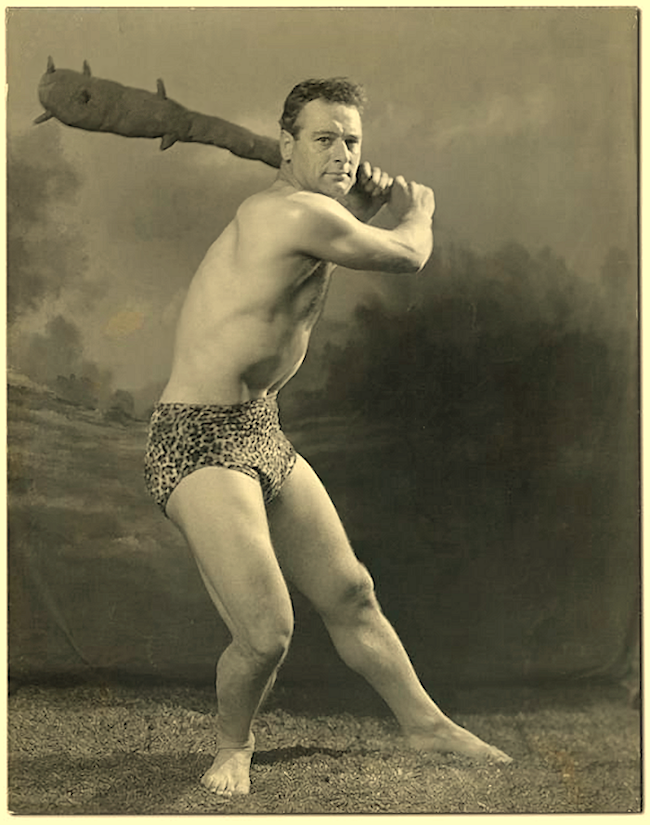
Lou of the Jungle - Lou Gehrig auditions for Tarzan, 1936


The history of the screen career of Edgar Rice Burroughs' Tarzan character is a long and complicated one. His first big screen appearance came in 1918, his most recent 2016. From 1932 to 1936, MGM made three very successful Tarzan films starring Johnny Weissmuller. But then MGM seems to have lost control of the film rights while, in the meantime, Burroughs had sold independent producer Sol Lesser options on his Tarzan novels for films to be produced at 20th Century Fox. Under contract to MGM, Weissmuller was unavailable to continue in the role, so a search began for a replacement, and athletes - like the former Olympic swimmer - were the most likely candidates.


At the instigation of his wife Eleanor - who was said to have had a “vision” for her husband’s career - Gehrig had previously signed on with Babe Ruth’s aggressive agent, Christy Walsh. When the Tarzan role looked up for grabs, Walsh pushed Gehrig to campaign for it. And when the agent suggested the baseball player to Lesser, the producer was receptive to the idea but, considering the character's necessary state of undress, he wanted to have a better idea of what Gehrig looked like out of uniform.


Walsh had the usually rather dignified Gehrig photographed in a leopard skin costume and, not satisfied with sending them to Lesser, also circulated the images to the media, probably hoping to create a public groundswell for Gehrig taking the part. Not surprisingly, the photographs were met with derision. Author Burroughs even snidely telegrammed Gehrig directly, “Having seen several pictures of you as Tarzan and having paid about $50 for newspaper clippings on the subject, I want to congratulate you on being a swell first baseman.”


After viewing the photographs himself, and finding Gehrig’s massive legs “more functional than decorative,” Lesser ruled him out for the role. The producer went on to choose gold medal decathlete Glenn Morris for his new Tarzan. The resulting film, 1938's Tarzan's Revenge, proved to be a flop and Lesser sold the rights back to MGM, where Tarzan and Weissmuller reunited for three more films. Then, Tarzan, Weissmuller, and Lesser all decamped to RKO for a further six films; Lesser would go on to produce nine more Tarzan films after Weissmuller's departure.

*

These three images go a good way toward explaining why he didn't get the part.

The "Iron Horse" certainly had the brawn...


... But it was probably better utilized wielding a bat.


Sunday, June 2, 2024

Half ladies and three-quarter females - a selection of portraits

 
Gräfin Chorinsky née Prinzessin Esterházy, by Friedrich von Amerling, 1838.
Elizabeth Howard, by Anthony van Dyck, circa 1638-40.
Catherine Clemens, by George Romney, 1788.
Unfinished portrait of Louise Élisabeth d'Orléans, by Jean Ranc, 1724.
Marie Rinteau, called mademoiselle de Verrières, by François-Hubert Drouais, 1761 and later.
Apparently exhibited by Drouais at the Salon of 1761, the sitter's hairstyle was altered by the artist or someone else during the 1770s to make it more en vogue.
Susanna Highmore, the artist's daughter, by Joseph Highmore, circa 1740-45.
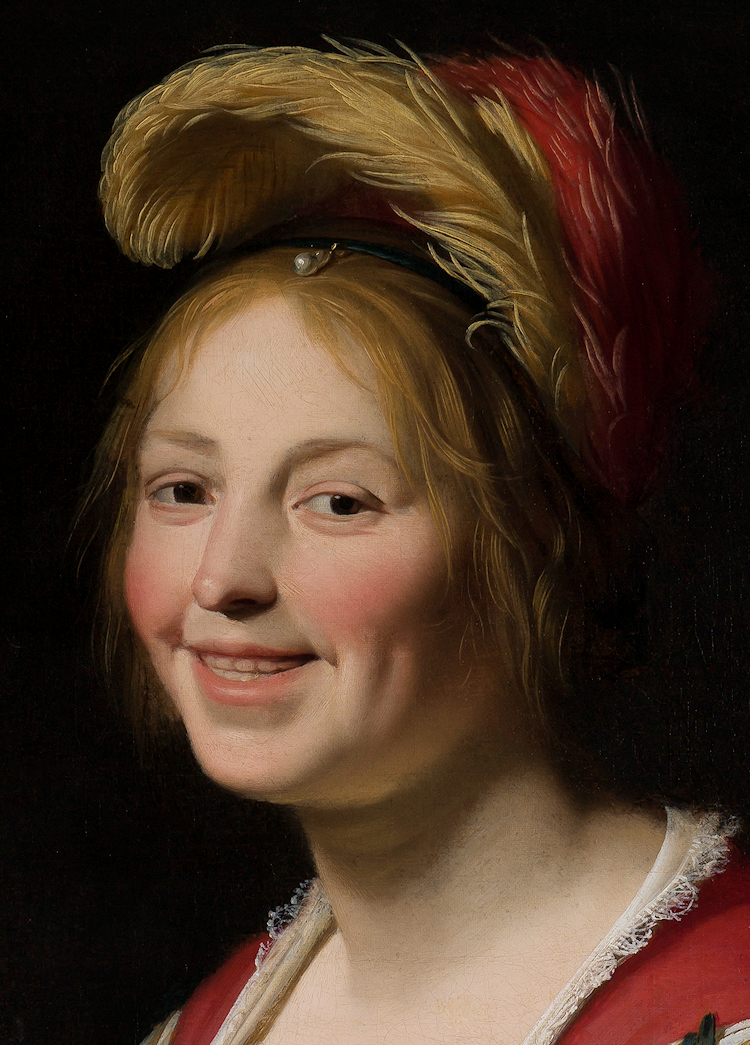
 Smiling Girl / Courtesan Holding an Obscene Image, by Gerrit van Honthorst, 1625. 
The model holds an image of a naked woman, perhaps the model herself, covering her face and captioned in Dutch Wie kent mijn naers van Afteren (Who
can recognize my 
backside from behind?). The small image likely advertises her services, as this was a common practice in the sex industry of the time.
Archduchess Maria Magdalena, Grand Duches of Tuscany, by Frans Pourbus the Younger, circa 1603-04.
Portrait of a Lady at a Harp, by Johann Julius Heinsius, 1785.
Madame Alexandre Dumas fils née Nadezhda von Knorring, by Jules Lefebvre, circa after 1864.
Madame Louis-François Bertin de Veaux née Augustine Bocquet, by Anne-Louis Girodet-Trioson, 1809.
Portrait of a Lady in a Green Dress, by Bartolomeo Veneto, 1530.
Mrs. John Sargent née Charlotte Bettesworth, by George Romney, circa 1778.
Giovanna Bagnara, by Pierre Subleyras, circa 1739.
Girl with a Canary, by Novak Radonić, 1865 (or 1858, depending on the source).
Olive Craster, by Nathaniel Dance-Holland, 1762.
Mary Josephine Drummond, condesa de Castelblanco, as Astrea, by Jean-Baptiste Oudry after Nicolas de Largillière, circa 1716.
Mrs. John Dawes, by George Romney, circa 1765-69.
Victoria, Duchess of Kent (the mother of Queen Victoria), by Franz Xaver Winterhalter, 1849.