L a - b e a u t é - s a u v e r a - l e - m o n d e ~ D o s t o ï e v s k i

L a - b e a u t é - s a u v e r a - l e - m o n d e  ~  D o s t o ï e v s k i


Showing posts with label Glyn Philpot. Show all posts

Sunday, February 8, 2026

Chasing Velázquez, chasing Manet - "Manuelito, the Circus Lad" by Glyn Philpot, 1909


This is the painting said to have launched Philpot's career. He had begun his formal art education at the Lambeth School of Art at the age of only fifteen and later, in 1905, at the Académie Julian in Paris. But the first great turning point in his artistic development came in 1908, during his travels in Spain. Upon returning to Britain, he embarked on a series of paintings inspired by his experiences in Spain, work that clearly shows the lingering influence of Goya and Velázquez, those artists that had, previously, had such a strong effect on, among others, Manet and Sargent. (In fact, it's nearly impossible not to see a direct line from Manet's Spanish-themed paintings to this piece.) 


"Manuelito, the Circus Lad" was first exhibited at the Modern Society of Portrait Painters in 1910, causing a sensation, and focusing the spotlight on the young artist, who would soon become a greatly sought-after society portraitist. After being shown at the Venice Biennale in that same year, the painting was bought by the Stedelijk Museum in Amsterdam, in whose collection it still resides.


Friday, April 7, 2023

A career from biochemistry to dressmaking - crêpe evening gown by Eva Luytens, circa 1935-40


Adapted from the description on the V&A website:

An evening gown in rippled crêpe, with contrasting taffeta ribbon bows which punctuate and secure the sleeves and shoulder seams, while giving a glimpse of the bare arms beneath; a similar effect is produced by the revealing back opening. The full-length gown is ingeniously cut and requires a minimal amount of fastening, merely a single hook and eye at the back of the neck. The front skirt, sides, and midriff are cut in one, while a curved central back panel forms the main part of a small train.

*

All but forgotten today, Eva Luytens was a much admired couturière in the 1930s. She was born Eva Lubrzynska in Russia in about 1894. Through connection with her uncle, the internationally renowned research chemist Chaim Weizmann, she went on to receive a degree in chemistry from Manchester University in Great Britain. And in 1911, she joined Marie Curie's research team at the University of Paris and published several research articles on biochemistry. She returned to Russia in 1917 and began an affair with Vladimir Nabokov; they came close to marriage, but she returned to Britain in 1920. There she was introduced to Robert Lutyens, son of the famous architect Sir Edward Lutyens, and a talented interior designer and painter in his own right. They were married that same year and became known as one of London's most fashionable couples. They had one son, David, who would become a published writer, but suffered from mental illness. It isn't clear exactly when she turned to fashion design, but by 1932 she had established herself at 28 Buckingham Gate, Westminster, the prestigious address being the home of her mother-in-law, the writer and theosophist Lady Emily Lutyens née Bulwer-Lytton. Having married into such a prominent family, her many clients were drawn from the most wealthy and aristocratic circles; she designed the gown Wallis Simpson wore to meet Queen Mary in 1934. Her business began to falter with the approach of WWII, when austerity was understandably the spirit of the day though, apparently, she had a resurgence in the 1950s. She divorced her philandering husband in 1948 and died in 1963.
Portrait by Glyn Philpot, circa 1935-36.


Sunday, January 22, 2023

Randomly XXV

 
Red Hollyhocks, by John La Farge, 1863.
Unknown, from an album belonging to Mary Adelaide of Cambridge, Duchess of Teck, circa 1860.
The Ghost of a Flea, by William Blake, circa 1819-20.
Jeune femme lisant une lettre près du groupe de putti « lutte pour un coeur » de Falconet,  circle of Marguerite Gérard, circa 1790.
The artist Giovanni Boldini, by Federico Andreotti, circa 1870.
Jeune footballeur, by Ángel Zarraga, 1927.
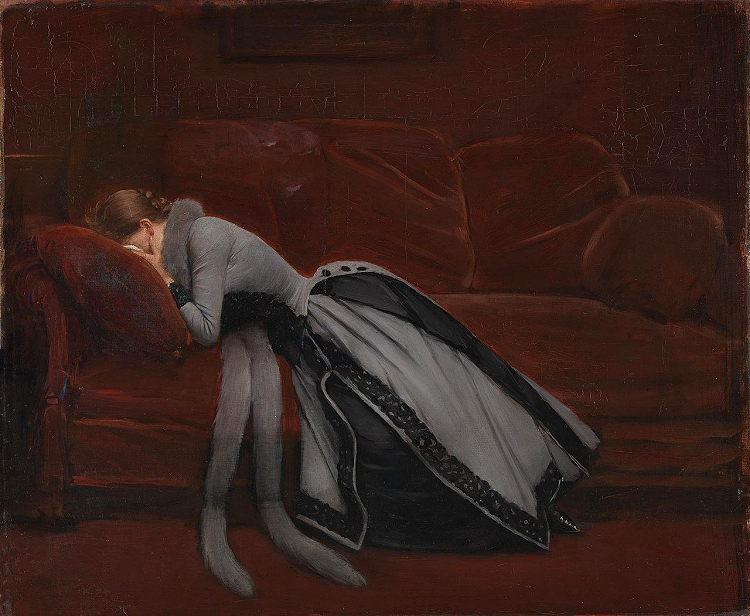
Après la faute, by Jean Béraud, circa 1885-90.
Meiji period photograph of a man in a sedan chair with two attendants on their way to Nikkō in Tochigi Prefecture.
Selection of shells arranged on shelves, by Alexandre Isidore Leroy de Barde, 1810.
Sketch of a man in profile, by Rudolph Friedrich Wasmann, circa 1830.
Allegory of Sacred and Profane Love, by Michele Desubleo, circa 1665-75.
Nude study, by Valdemar Andersen, circa first quarter of the twentieth century.
Alexina Nesbit Sandford née Lindsay and Catherine Hepburne Lindsay, by Andrew Geddes, circa 1838.
L'Admiration !, by comte Olympe Aguado de las Marismas, circa 1860.
Pot de violettes et panier de fraises, by Léon Marie Benoît, 1910.
Jeune femme endormie (inscribed upper left: "Á Jacques et Valentine, paternellement..."), by André Devambez, ND.
Tsuguharu Foujita, by madame d’Ora, 1926.
 Enfant emmaillotté dans un berceau en forme de conque, French School, follower of Jean Nocret, circa 1700.
Golden Fish, by Henri Matisse, 1912.
Carte de visite of a Black Union soldier.
Mrs. Charles Hatchett, by Thomas Gainsborough, circa 1786.
Miss Catherine Tatton, by Thomas Gainsborough, 1786.
Stream behind the Barn - On the Stream Bank, by Ladislav Mednyánszky, circa 1873-1875.
French Market, New Orleans, by Pierre Fatumbi Verger, 1934.
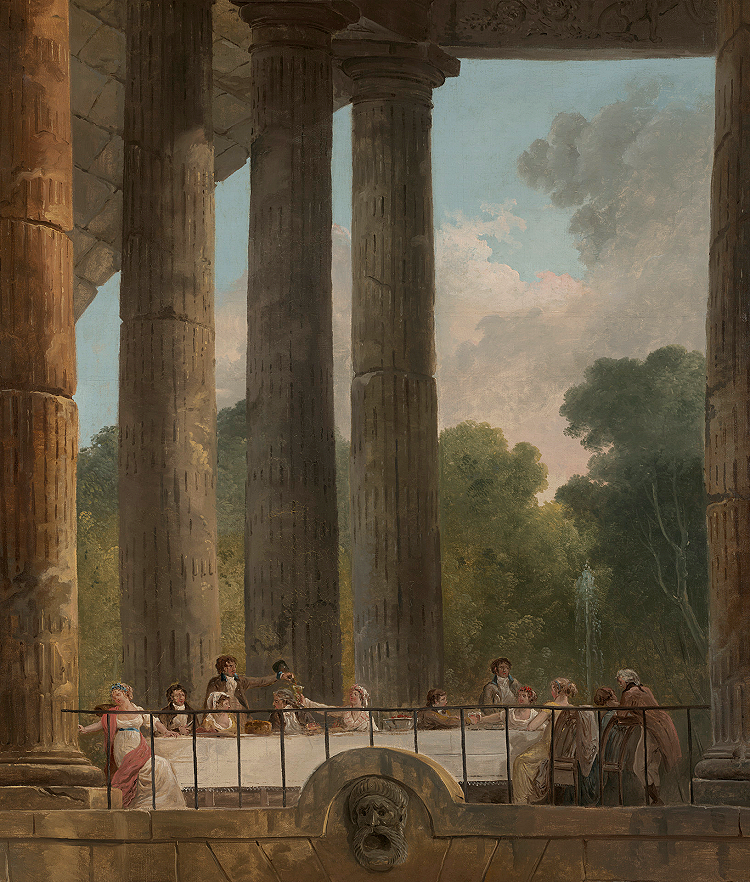
A Banquet in the Ruins of a Temple, by Hubert Robert, 1795.
Tekemessa and Eurysakes, by John Henry Fuseli, circa 1800-10.
Saturday Evening Post cover, Halloween, by Frederic Stanley, 1921.
Two sisters, by Cornelis de Vos, circa 1610-15.
Crescentia, Countess Széchenyi, by Ferdinand Georg Waldmüller, 1828.
Apollo and Marsyas, by Hans Thoma, 1888.
Combat of Love and Chastity, by Gherardo del Fora, circa 1480-1500.
From the series “Jardines interiores", by Yuris Nórido Ruiz Cabrera, contemporary.
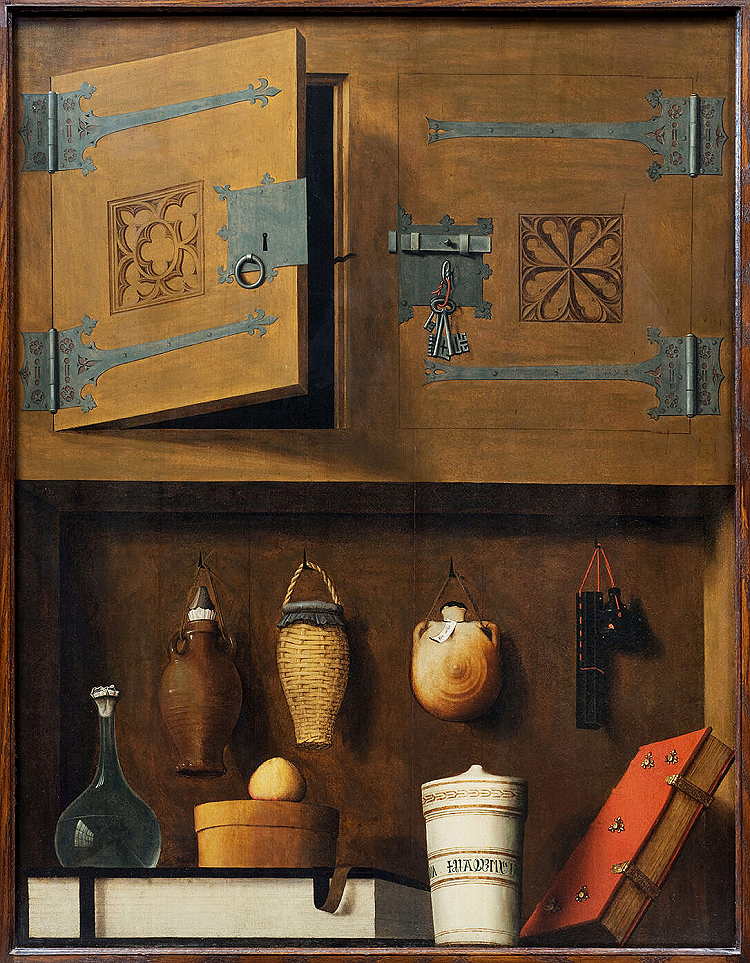
Nature morte aux bouteilles et aux livres, anonymous, circa 1530.
Ensemble by Maggy Rouff worn by Ann-Emily Lacey, by Egidio Scaioni, 1934.
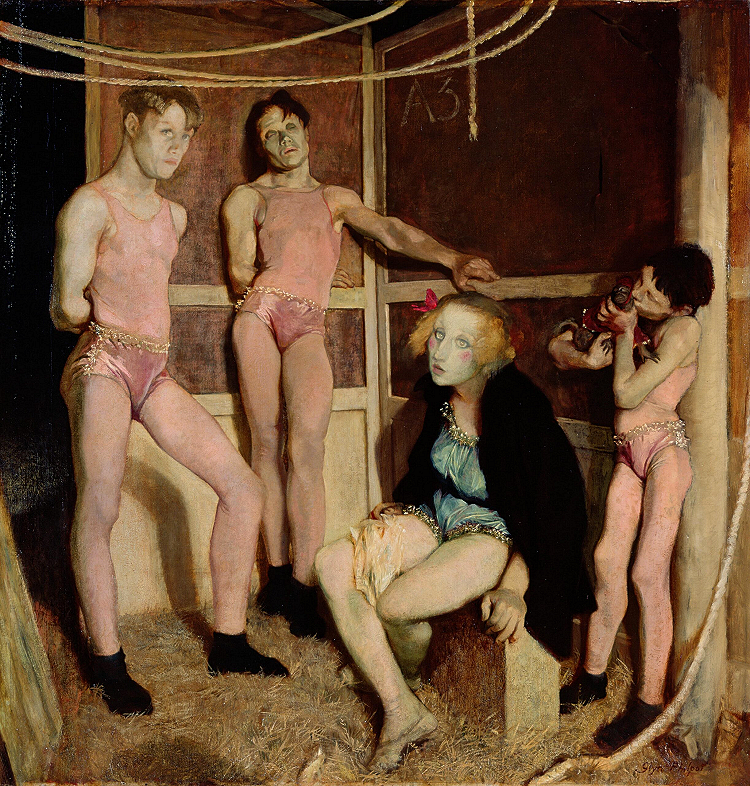
Resting Acrobats, by Glyn Philpot, 1924.
Bouquet de pensées, Léon Bonvin, 1863.
The Cotillion, by Howard Chandler Christy, circa 1901.
In Brooklyn Navy Yard, by William Merritt Chase, 1887.
  Gerberas at Monbulk, by Jesse Dayan, contemporary.
Bildnis eines Malers in einem Pariser Atelier, by Ottilie Roederstein, 1887. 
Le Parc à Versailles, by Henri Martin, circa 1910-20.
I fidanzi - promessi (the engaged couple - vows), by Giuseppe Tominz, 1832.
Pins au clair de lune, by Thorolf Holmboe, 1902.
National Academy, Amsterdam, by Maria Austria, 1962.
A young Lady at her Toilet, by Willem van Mieris, circa 1681.
Self-portrait, by Bruno Schulz, 1933.