L a - b e a u t é - s a u v e r a - l e - m o n d e ~ D o s t o ï e v s k i

L a - b e a u t é - s a u v e r a - l e - m o n d e  ~  D o s t o ï e v s k i


Showing posts with label Elsa Schiaparelli. Show all posts

Sunday, February 15, 2026

Dietrich in Schiap - photographs by Lee Miller, Paris, 1944

 
The first four images are from the Lee Miller Archives.

Whether you believe her version or that of her daughter's regarding the duration of the tour, Dietrich had spent months traveling in North Africa and Italy entertaining the troops. Arriving in the just liberated French capital in September of 1944, she met up with photographer Lee Miller whose own wartime work alternated between the front line and creating features for Vogue. The meeting produced these images of the actress modeling an evening coat/hostess gown by one of her favorite fashion designers, Elsa Schiaparelli. The images were sent to Vogue that same month, and Dietrich went on to wear the garment at further war-related appearances and in publicity portraits.

*
Two months later, on 20 November, Dietrich wore the coat when she performed for the 23rd Headquarters Special Troops at the seminary in Luxembourg City.
The 23rd - aka "The Ghost Army" - was a tactical deception unit that had been formed to mislead the Axis forces as to the size and location of Allied forces.
*
That same month, this time in Namur, Belgium, she wore the coat again when, famous for her "million dollar" legs, she judged those of a sextet of American GIs. 

*

She also wore it for a series of formal portraits, with typical "movie star" lighting, and wearing full-on makeup and a longer wig instead of her own hair. 
I don't know who the photographer was or the reason for the session, possibly publicity for "Kismet" the only film she starred in that year.

*

The garment survives, but un-Dietrich-ed it looks distinctly less fabulous.

*


Monday, March 24, 2014

Schiaparelli hat modeled by Lud, photograph by Horst, 1946


"Lud" was one of the best known of the émigrée fashion models whose beauty graced the great fashion house of Paris in the 1920s and 1930s.  Her story is told here - and far better than I could tell it - thanks to two friends of mine:  Celebrated designer and collector Alexandre Vassiliev wrote about her in his truly remarkable, important book, "Beauty In Exile", which was published in 2000.  This is an extract from the book review by Grant Hayter-Menzies, a respected and prolific author himself, whose writing - as it is here - is always both elegant and humane.

"Yet while Nathalie Paley [another celebrity model; daughter of Grand Duke Paul, who had been executed by the Bolsheviks in 1919], for all her finely chiseled beauty and romantic background, did not have the happiest of lives, nothing in her experience quite matches the roller coaster fortunes of Ludmila Feodoseyevna, known in the business as 'Lud'. And not even Nathalie Paley, that distillation of the striking elegance of her mother and what was most handsome from her imperial father's ancestry, could match what Lud had to offer. For one thing, Lud looked, and was, solidly Russian. She had the cheekbones, the lips at once frankly sensual and playfully amused, the slightly upward slanted eyes that hinted at something distantly, fantastically oriental. Those eyes (which grace the dust-jacket of Vassiliev's book) were her greatest feature, because they were different in every photo, from every angle the blue of ice one moment, the blue of warm bright gemstones the next, powerful proof of the Russian's proverbial variety of moods.

"Born in St Petersburg in 1913 to a vice-governor of Vladimir province, Lud escaped with her family to the Crimea after the Bolshevik revolution, thence to Constantinople, Greece and France. In exile, Lud proved to be more than just a pretty face. While her widowed mother struggled to make ends meet, Lud took high grades at a French lycée and planned to enter university to study philology.

"Fate determined a different course for Lud when the famed photographer Horst espied her delivering dresses to Vogue's Paris studio. Thus at age eighteen, Lud began what was to be a fabulous modeling career, first with the house of Countess Vera Borea, then Patou, then Chanel. She married a French marquis, and knew the delicious experience of having rivals Elsa Schiaparelli and Coco Chanel vie graspingly for her services. In 1937, wearing a draped white gown from Alix and posed like some lethally beautiful Medea between fluted columns, Lud was photographed by Horst in what Vassiliev describes as 'one of the immortal images of twentieth century fashion.'

"We all know beauty and wealth do not guarantee happiness, but the gods sought to use Lud to press the point home. First her marriage to the marquis failed; she married again, to a naval engineer, and began to appear in films. She left France for a time, living first in Argentina and later in the United States, and her second marriage broke up. By the time she returned to France in the early 50's and began working for Balenciaga, she sensed that somehow her sun had set. There were financial woes, brought on by her unflagging addiction to high living. She ended up taking a job at the Slenderella beauty institute, earning some cash on the side by singing in the chorus of the Paris Opéra. In 1959, the once glorious Lud was living in the resort town of Le Touquet, where the only work she could find was as an airport clerk. When that job ended, she found a new position, as head of curriculum at a private school, and when that job ended, Lud was hired as director of a home for aged Russians, where among the charges she oversaw was another faded Russian model, Princess Maria Eristova. Still, there was a little happiness for Lud at the end: in 1982, she married a childhood friend, Pierre de la Grandière, and lived with him in the French Alps until her death from cancer in 1990.

"In describing her mother, Lud's daughter also gives a fair account of most of the other artistic Russian émigrés. Lud feared nothing and no one, remembered her daughter, never hesitating to sail a boat out onto a stormy lake or take a stroll through a crime-ridden Paris purlieu. Lud was in love with living: 'She was the daughter of Epicurus.'"

The full book review is available here.


Monday, March 10, 2014

Wallis Simpson in Schiaparelli's "Lobster Dress", by Cecil Beaton, 1937


Photographed in France for Vogue magazine, just prior to her marriage to the Duke of Windsor, the newly-ex-King Edward VIII.  The graphic design of Schiaparelli's famous dress was by Salvador Dalí.

Though it's often cited as the dress, this is not the same copy worn by the soon-to-be Duchess; the decoration
on the bodice is on the opposite side and Mrs. Simpson's waistband is of a narrower proportion.


Sunday, February 23, 2014

Le génie du coiffeur polonais - Antoine de Paris


Arletty in the operetta Xantho chez les Courtisanes, photograph by Boris Lipnitzki, 1932.
(Interesting that his fingers and wrists have been retouched to make them more slender.)
Elsa Schiaparelli, photograph by Man Ray, circa 1933.
Opera singer and actress Françoise Rosay, 1932.
Joséphine Baker, 1933.

Antoni "Antek" Cierplikowski (24 December 1884, Sieradz, Poland - 5 July 1976, Sieradz, Poland), known as Monsieur Antoine and, professionally, as Antoine de Paris, considered the world's first modern celebrity hairdresser. Born in one of the oldest cities in Poland, he learned to dress hair from an uncle in nearby Łódź. He moved to Paris in 1901 and began work in the salon at the Galeries Lafayette, moving with his fashionable clientele to Deauville for the summers. After much success and with ever increasing celebrity, he opened the Antoine de Paris salon at 5 rue Cambon in 1911. Little more than a decade later, he had a salon in New York City, eventually owning sixty-seven salons in Europe and America. He dressed the hair of crowned heads and many of the world's most famous women, while living quite a grand and eccentric lifestyle, himself.

Photograph by Man Ray, 1933.

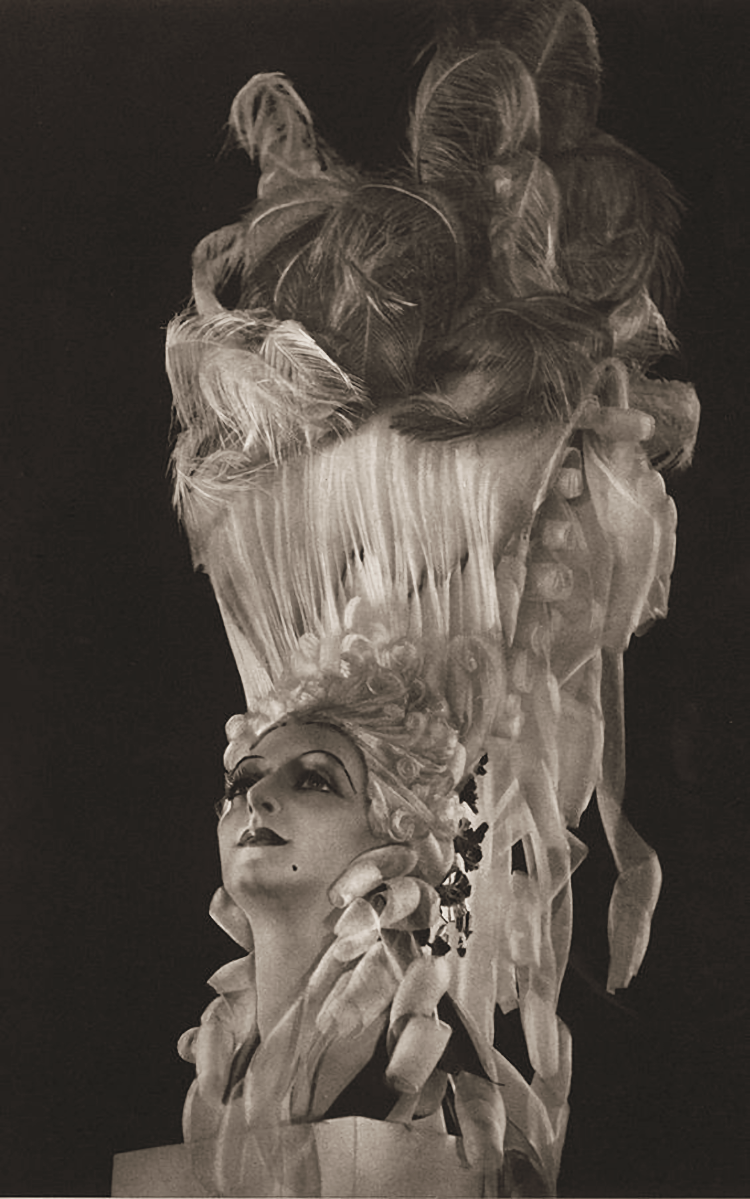
Antoine is credited with, among other things: bobbed hair, the perm, hair lacquer, blond streaks, and the blue or lilac tinting of gray or white hair; in this last he was abetted by his famous client, interior decorator Elsie de Wolfe, Lady Mendl, who made the "blue rinse" into a popular and long lasting vogue. He was also known for his outrageous lacquered wigs, which were popular among performers and European "fashionistas" during the early Thirties.

Joséphine Baker, 1933. (Four images.)
Elsa Schiaparelli, two photographs by Man Ray, circa 1933.
Arletty, in the operetta Xantho chez les courtisanes, photograph by madame d'Ora, 1933.
Brigitte Helm in L'Atlantide, 1932. (Two images.)

He was always quite adept at self-promotion. And like any smart modern entrepreneur, he marketed his own hair products and cosmetics, and trained young hairdressers in his methods and employed them in his salons. 

 Some of the packaging from his line of beauty products.
In Hollywood, with a most unlikely Bette Davis, 1933. (Two images.)
Actress Frances Dee, 1933.
Three fantasy wigs.
Photograph by Brassaï.
 
Ear clips by Boivin, photograph by Hoyningen-Heune, Vogue, 1934.

Twinned highlights of his career came when he supervised - along with a cadre of his skilled hairdressers - the mass coiffing of court ladies at both the 1937 and 1953 British coronations. By the Sixties, though, his star had been eclipsed by a new breed of hairdressers - many of whom he'd trained - and he slipped into relative obscurity. In 1973, he returned to his hometown in Poland - then still a Soviet satellite - where three years later he died at the age of ninety-one.

Of note is the flawless toenail varnish. 
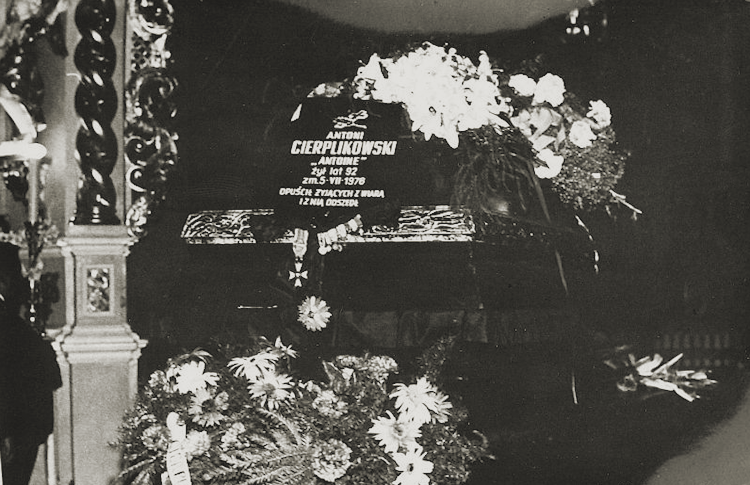
His grave in Sieradz, Poland, his birthplace.

*

The Honorable Mrs. Reginald (Daisy) Fellowes, gown by Schiaparelli, photograph by Horst, Vogue, 1935.
Elsa Schiaparelli, photograph by Man Ray, circa 1933.
Life mask of Dolores Wilkinson and Boucheron bracelet, photograph by Hoyningen-Heune, 1932.